Voted #1 Family Law Firm in California
in a statewide poll limited to Judges, Attorneys, and Law Firm Administrators.
Request a Consultation
The dedicated attorneys at The Schoenberg Family Law Group, P.C., help people like yourself get through custody battles. Having a compassionate Palo Alto child custody attorney working for you makes the child custody process less stressful and puts your mind at ease. We will explain child custody laws to you and work with you to build your child custody case. We are focused, experienced, and compassionate advocates who will aggressively pursue the best possible outcome for yourself and your children.
Schedule your confidential consultation with a child custody attorney at The Schoenberg Family Law Group, P.C., today to speak about any child custody issue, including the following:
Child custody orders are available when a parent opens a family law case with the court. The following types of family law cases permit the issuance of child custody orders:

When making decisions about child custody, California courts look to the child’s “best interests” and each parent’s ability to care for the child. The best interests standard is a set of factors used by family court judges to aid in determining custody and visitation orders. The best interest standard is also the focus of any custody case when making custody arrangements for children.
Family court judges use the following factors as a guide when making custody and visitation rulings:
A judge considers all relevant, available information regarding a child’s life when making custody and visitation orders.
There are two types of child custody, physical custody, and legal custody. Legal custody is the power to make crucial decisions regarding a child’s health, welfare, religious upbringing, medical care, and education. Physical custody pertains to the actual residence in which the child resides.
When high-conflict custody disputes cannot be resolved through standard mediation, the Santa Clara County family court may order a formal Child Custody Evaluation, commonly referred to as an Evidence Code Section 730 Evaluation. Conducted by a court-appointed, neutral mental health professional or child psychologist, this in-depth process involves psychological testing, parent-child observations, interviews, and reviews of school and medical records.
The evaluator ultimately submits a comprehensive report detailing what specific arrangement serves the child’s best interests. Because family court judges place immense weight on these expert recommendations, navigating a 730 evaluation requires highly strategic legal preparation and oversight from an experienced trial lawyer.
Navigating Santa Clara County Court Protocols: For parents residing in Palo Alto, child custody matters are handled by the Family Division of the Santa Clara County Superior Court, with primary filings and Family Court Services located at the Family Justice Center Courthouse in San Jose. Before a judge will hear a contested custody dispute, both parents are required by local court rules to complete a mandatory Parent Orientation and participate in court-ordered mediation through Family Court Services.
When possible, parents work out a custody and parenting schedule on their own. This schedule is called a parenting plan. Parenting plans outline who the children live with and how the other parent will visit with the children.
In California, divorcing parents must attend mediation to work out a custody and visitation agreement before the court becomes involved. If parents are unable to make their parenting plan at mediation, the court makes one for them based on the best interests of the child.
It is recommended that parents work together to determine their own parenting plan as they know their children and schedules better than the court.
Visitation encourages both parents to spend time and maintain a relationship with their child. When a child lives primarily with one parent, the other parent has visitation. Both parents may have joint legal custody but not joint physical custody.
There are three types of visitation:
Today’s technology allows for expanding methods of visitation between parents and children. Virtual visitation by Zoom, FaceTime or other computer software is now a popular option for parents and children separated by distances or work schedules that make traditional visitation too difficult. Although not the same as regular visitation, virtual visitation may protect and preserve family bonds that may otherwise collapse.
Parents have legal rights and responsibilities towards their children. When you work with The Schoenberg Family Law Group, P.C., we take the time to address these legalities and their effect on you and your children. Our attorneys want you to have the information needed to make confident choices in your child custody matters.
The decisions you make now are essential. They will affect you and your family for years to come. Speak with professionals who practice law in the family law courts every day before making any life-altering choices. At The Schoenberg Family Law Group, P.C., we will help you build a roadmap for your future.
"I was seeking a reputable family law firm for my prenuptial agreement and received high praise for the Schoenberg Law Group. My attorney listened to my questions and responded to them very patiently. She also paid close attention all my concerns and made sure I was aware of the legal value of the agreement I was about to sign. It was…”
D.R.“It has been a real blessing to find this family law group in my life. I was in the middle of a custody battle with my ex wife and had a lawyer who had sided with my ex wife’s lawyer. I was faced with the option of paying to a regular lawyer to do half jobs with no results or to invest a bit more for a top family counselor who understood my situation and at the same time not giving me false hopes."
A.L."I hesitated filing papers for a long time because I was not sure if I could survive a long legal battle. When we were married, my husband worked while I raised the children, two under four years old, and I was afraid I would lose the stability they needed. I had a wonderful group of friends that helped me search for a reputable law firm that could represent me when my focus was on my children. They found the"
L.A.We are trial lawyers who litigate high-conflict, high-stakes cases. While we try to build on mediation efforts and exhaust opportunities for a negotiated agreement, emotions, egos and various other realities often force these disputes into court. It is critical to work with a firm that knows how to apply the law and the facts in your favor, whether in the courtroom or at the negotiating table.
One of California’s Top Family Lawyers for five consecutive years: 2022–2026

SFLG Voted #1 Family Law Firm in California for six consecutive years: 2021 - 2026

One of the Best Places to Work in the Bay Area by San Francisco Business Times

Debra Schoenberg was named a Fellow of the American Academy of Matrimonial Lawyers (AAML)
Designated as a Certified Family Law Specialist by the State of California Board of Legal Specialization

Board-Certified Family Law Trial Specialist by The National Board of Trial Advocacy (NBTA)
“My goal is to preserve your dignity and your humanity throughout what can be a very difficult and painful process, while at the same time achieving a favorable outcome on your behalf.”
Over 400 Years of Collective Family Law Experience
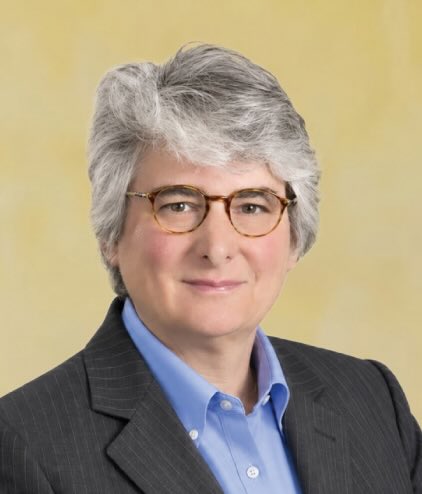 Debra R. Schoenberg
Owner & Founder
Debra R. Schoenberg
Owner & Founder









 Kimia Kojouri
Associate
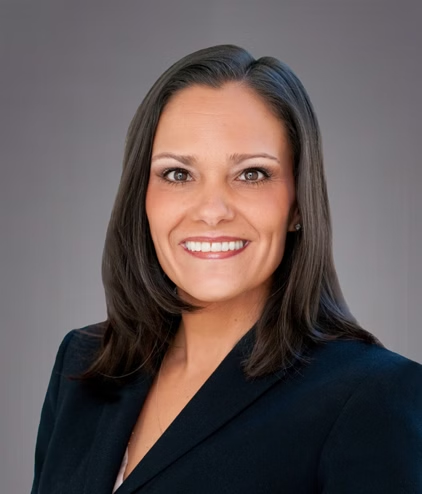
Kimia Kojouri
Associate




Legal custody grants a parent the right and responsibility to make major decisions regarding a child’s health, education, and general welfare, such as choosing schools or medical treatments. Physical custody dictates where the child physically resides on a day-to-day basis. Both legal and physical custody can be awarded as sole custody to one parent or joint custody shared between both parents.
Santa Clara County utilizes a tiered, confidential mediation system through Family Court Services. Tier I consists of mandatory, non-recommending confidential mediation aimed at helping parents reach a voluntary agreement. If parents fail to reach a settlement, the court may progress the case to Tier II, fact-finding mediation, or schedule a Judicial Custody Conference where a judge handles the outstanding disputes.
In California, a child cannot unilaterally choose which parent to live with, but the court will consider their preference if the child is of sufficient age and capacity to form an intelligent preference, typically age 14 or older under Family Code Section 3042. The judge will listen to the child's reasoning but will ultimately make the final decision based on a holistic assessment of the child's best interests.
A parent planning to relocate with a child outside of the immediate area or out of state must obtain either written consent from the other parent or a move-away court order. If the move significantly impacts the existing custody schedule, the court will evaluate the relocation based on whether the move is in good faith and how it affects the child's stability, school ties, and relationship with the non-moving parent.
Silicon Valley's demanding work environments and corporate travel schedules are frequently factored into local parenting plans. Judges focus on a parent's ability to provide a stable, consistent environment, rather than penalizing them for work hours. In these situations, custom parenting plans using flexible schedules, right of first refusal, or virtual visitation are often leveraged to maintain strong parental bonds.
Yes, a child custody or visitation order can be modified if there has been a significant change in circumstances since the original order was issued. Common grounds for modification include changes in a parent’s work schedule, a relocation, safety or substance abuse concerns, or instances where the child's evolving educational or developmental needs require a shift in schedule.