Voted #1 Family Law Firm in California
in a statewide poll limited to Judges, Attorneys, and Law Firm Administrators.
Request a Consultation

Family law issues are often incredibly complicated and require unique approaches to resolution. That is why it is vital to retain an experienced legal team to advocate for you in your family law matter. At the Schoenberg Family Law Group, P.C., our Sonoma County family law attorney can fill any role needed as your legal counsel, whether that is as a compassionate negotiator or aggressive courtroom litigator. We focus on protecting your legal, financial, and personal rights both now and into the future.
Our skilled legal counsel are:
Contact the Schoenberg Family Law Group, P.C. today to discuss your upcoming or pending family law matter with a professional. We will guide you towards possible solutions and conflict resolution techniques in your case.

Family law is our focus at the Schoenberg Family Law Group, P.C. Family law is a branch of civil law that covers a broad area of issues, most concerning relationships between family members and other loved ones.
An experienced family law attorney from the Schoenberg Family Law Group, P.C. can help you with any of the following cases and more:
As family law attorneys, we pride ourselves on helping you to:
At the Schoenberg Family Law Group, we handle high-net-worth and high-conflict cases. We want to reduce the anxiety and stress created by your legal issues. Call or reach out to our Sonoma County office online to let our family law attorneys care for your case.
Prenuptial and postnuptial agreements are legal documents that set forth rules married couples must follow upon divorce or death. These rules pertain to the division of assets and finances. While these documents are similar, a prenuptial agreement is signed before marriage, and a postnuptial agreement is signed after marriage.
It is imperative to draft either document with the help of attorneys as they must follow specific rules to be upheld in court. Both must be entered into voluntarily, be in writing, signed and notarized, and be clear, transparent, and fair.
Divorce is only one way to end a marriage in California. A couple may also file for a legal separation or an annulment. Only one spouse must file for a divorce.
California is a no-fault divorce state, meaning neither party is to blame for the divorce. One spouse must only state the spouses have irreconcilable differences.
To file for a divorce in California, the filing spouse must be a resident of California for six months prior to filing and a resident of the county in which they file for three months before filing.
 Helpful and supportive
Debra and team were so helpful and supportive through the most difficult time in my life. Grateful to the team for their advice – would highly recommend their services to anyone needing a divorce attorney.
Military divorces are more complex than other divorces due to additional state, federal and military laws that apply to the division of pensions, health insurance, properties, and pay. State laws still determine child custody, debt, spousal support, and child support.
California is a community property state meaning marital assets and debts are shared equally upon divorce. Marital assets and debts typically do not include separate property distinguished by prenuptial and postnuptial agreements or:
Spouses may request support both during the pendency of a divorce action and at the close of a divorce case. Temporary spousal support awards end when the divorce is finalized and are typical to cover the living expenses of the lower-earning spouse during the divorce.
Rehabilitative, permanent, and reimbursement support begin after the divorce. The most common of these is rehabilitative support. The goal of rehabilitative spousal support is to give the lower-earning spouse an opportunity to gain valuable job skills or education and become self-supporting.
Permanent spousal support is rare but may be awarded in cases of long-term marriage where a spouse cannot enter the workplace due to advanced age or illness. Reimbursement support may be requested by a spouse who helped finance the other spouse’s education or career advancement during the marriage but will not realize the benefit of their investment.
California has both legal and physical child custody. Legal custody is a parent’s ability to make significant decisions regarding a child’s health, education, and welfare. Physical custody refers to which parent a child lives with.
Parents may share legal and physical custody, or a parent may have sole legal and physical custody. Joint physical custody does not have to be an even split, just approximate. If a parent does not have physical custody of a child, that parent is said to have visitation.
When judges have to make a custody and visitation order on behalf of parents, they do so according to the best interests of the child. When deciding what is in the child’s best interests, the court considers:
Courts do not give preferential custody to the mother or the father regardless of the age or sex of the child.
Parents must support their children. In California, parents are required to pay support until a child turns eighteen or nineteen if the child is still in high school and living with a parent.
California has a set of child support guidelines that include a mathematical formula for computing monthly child support obligations. Factors included in the child support calculation include, but are not limited to:
A guardianship is a court order for someone other than a child’s parent to:
A guardianship is not an adoption. In guardianship, parents still have rights and can request reasonable contact with a child. A guardianship can terminate if the parents can take care of a child.
In an adoption, parents’ rights are permanently terminated. The adoptive parents’ rights become those of the birth family as to inheritance.
For more information about any family law issue in Sonoma County, contact the experienced, compassionate attorneys at the Schoenberg Family Law Group, P.C. We want to help you find practical, creative solutions to your most complex family law problems.
At the Schoenberg Family Law Group, P.C., we only practice family law and are dedicated to bringing you the best possible family court outcome. Whether this is through extensive negotiations, mediation, or trial litigation, our firm is prepared to represent you.
Speak with our office in Sonoma County today to schedule your private consultation. Contact us online today.
{ "@context": "https://schema.org", "@type": "FAQPage", "mainEntity": [{ "@type": "Question", "name": "How Our Sonoma County Family Law Lawyers Can Help?", "acceptedAnswer": { "@type": "Answer", "text": "Family law is our focus at the Schoenberg Family Law Group, P.C. Family law is a branch of civil law that covers a broad area of issues, most concerning relationships between family members and other loved ones.
An experienced family law attorney from the Schoenberg Family Law Group, P.C. can help you with any of the following cases and more:
Prenuptial and postnuptial agreements; Divorce; Same-sex marriage and divorce; Military divorce; High-asset and complex divorce; Property division; Child custody and visitation; Child support; Modifications of orders; Enforcement of judgments; Paternity; Domestic violence; Adoption; and Guardianship.
As family law attorneys, we pride ourselves on helping you to:
Understand California law as it pertains to you; Negotiate or litigate your case as your circumstances demand; Create a complete, error-free, and enforceable order that meets your needs; and Move your case through the family law system as expeditiously as possible.
At the Schoenberg Family Law Group, we handle high-net-worth and high-conflict cases. We want to reduce the anxiety and stress created by your legal issues. Call or reach out to our Sonoma County office online to let our family law attorneys care for your case." } },{ "@type": "Question", "name": "What Are Prenuptial and Postnuptial Agreements in Sonoma County?", "acceptedAnswer": { "@type": "Answer", "text": "Prenuptial and postnuptial agreements are legal documents that set forth rules married couples must follow upon divorce or death. These rules pertain to the division of assets and finances. While these documents are similar, a prenuptial agreement is signed before marriage, and a postnuptial agreement is signed after marriage.
It is imperative to draft either document with the help of attorneys as they must follow specific rules to be upheld in court. Both must be entered into voluntarily, be in writing, signed and notarized, and be clear, transparent, and fair." } }] }
"I was seeking a reputable family law firm for my prenuptial agreement and received high praise for the Schoenberg Law Group. My attorney listened to my questions and responded to them very patiently. She also paid close attention all my concerns and made sure I was aware of the legal value of the agreement I was about to sign. It was…”
D.R.“It has been a real blessing to find this family law group in my life. I was in the middle of a custody battle with my ex wife and had a lawyer who had sided with my ex wife’s lawyer. I was faced with the option of paying to a regular lawyer to do half jobs with no results or to invest a bit more for a top family counselor who understood my situation and at the same time not giving me false hopes."
A.L."I hesitated filing papers for a long time because I was not sure if I could survive a long legal battle. When we were married, my husband worked while I raised the children, two under four years old, and I was afraid I would lose the stability they needed. I had a wonderful group of friends that helped me search for a reputable law firm that could represent me when my focus was on my children. They found the"
L.A.We are trial lawyers who litigate high-conflict, high-stakes cases. While we try to build on mediation efforts and exhaust opportunities for a negotiated agreement, emotions, egos and various other realities often force these disputes into court. It is critical to work with a firm that knows how to apply the law and the facts in your favor, whether in the courtroom or at the negotiating table.
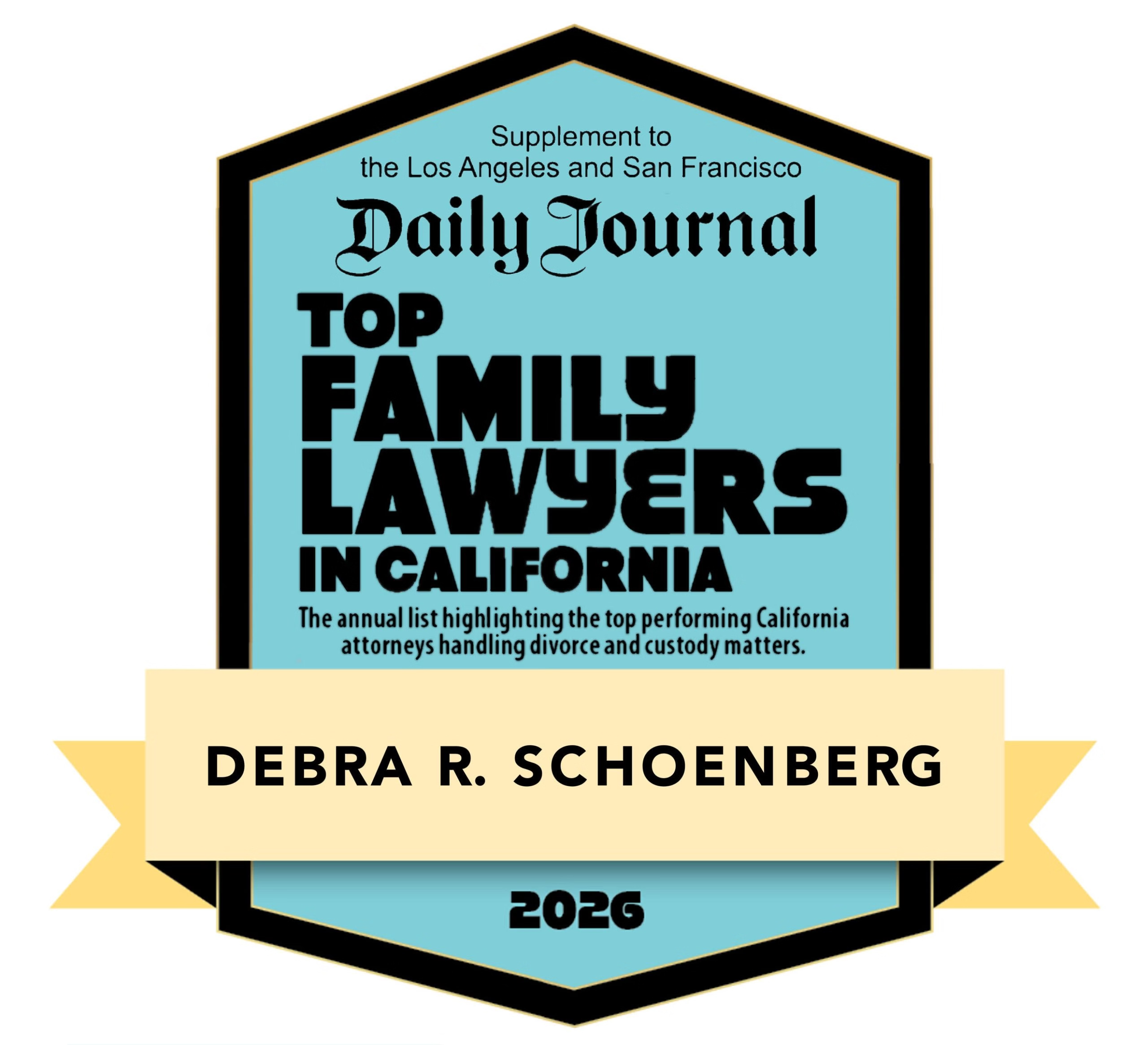
One of California’s Top Family Lawyers for five consecutive years: 2022–2026

SFLG Voted #1 Family Law Firm in California for six consecutive years: 2021 - 2026

One of the Best Places to Work in the Bay Area by San Francisco Business Times

Debra Schoenberg was named a Fellow of the American Academy of Matrimonial Lawyers (AAML)
Designated as a Certified Family Law Specialist by the State of California Board of Legal Specialization

Board-Certified Family Law Trial Specialist by The National Board of Trial Advocacy (NBTA)
“My goal is to preserve your dignity and your humanity throughout what can be a very difficult and painful process, while at the same time achieving a favorable outcome on your behalf.”
Over 400 Years of Collective Family Law Experience
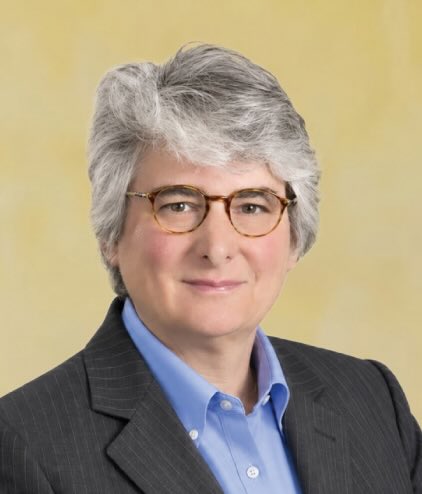 Debra R. Schoenberg
Owner & Founder
Debra R. Schoenberg
Owner & Founder









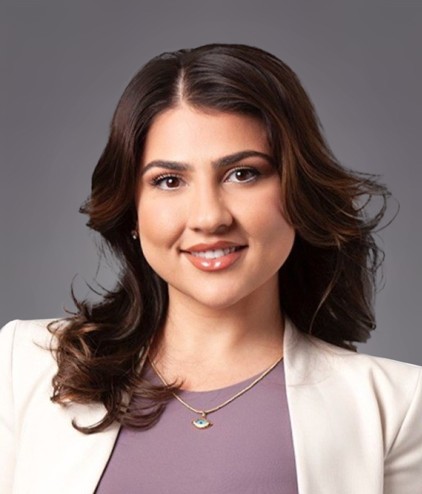 Kimia Kojouri
Associate
Kimia Kojouri
Associate





Family law cases in Sonoma County are handled through the Superior Court of California, County of Sonoma, with many divorce, custody, support, and related matters processed at the Civil and Family Law Courthouse in Santa Rosa.
You are not legally required to hire a lawyer, but having one is important, especially if your case involves children, property, support, domestic violence, business interests, or conflict with the other party.
A California divorce takes at least six months because the state has a mandatory waiting period. Contested divorces involving custody, property division, support, or high-conflict disputes may take longer.
California community property law requires an equal division of assets and debts acquired during the marriage. Separate property may be excluded if properly traced and proven.
If parents cannot agree on custody and visitation arrangements, the court requires them to participate in mediation through Family Court Services before a judge makes a decision based on the child’s best interests.
Yes. A parent may request a child support modification if there has been a substantial change in circumstances, such as job loss, income changes, new childcare costs, or changes in parenting time.