Voted #1 Family Law Firm in California
in a statewide poll limited to Judges, Attorneys, and Law Firm Administrators.
Request a Consultation

Property division is the legal process of separating a couple’s shared assets, earnings, and liabilities following the end of a marriage. Determining the distribution of a marital estate can be one of the most complex and contentious phases of a dissolution. In Beverly Hills, where high-value real estate and complex financial portfolios are common, these arrangements are typically finalized through a negotiated settlement, a mutual agreement, or a judicial decree issued by the Los Angeles County Superior Court. Securing an experienced Beverly Hills property division lawyer is the first step toward safeguarding your financial stability.
At Schoenberg Family Law Group, P.C., we provide the refined legal strategy and technical expertise required to untangle complex financial webs. We serve clients in Beverly Hills and surrounding communities, including Bel Air, Holmby Hills, and West Hollywood, ensuring that every asset is accurately identified and valued.
California is a community property state. Under California Family Code Section 2581, the law presumes that all assets and debts acquired during the marriage are jointly owned by both spouses. Upon divorce, these are generally divided equally. However, “equal” does not always mean “simple.”
A Beverly Hills property division lawyer from our firm can assist with the critical distinctions between:
A carefully crafted prenuptial or postnuptial agreement can clarify separate and community property, significantly streamlining the property division process, and protecting your assets in the event of a Beverly Hills divorce.
For many of our clients, the marital estate involves more than just a family home and a savings account. We specialize in “complex property distribution,” which often requires a team approach. Our firm routinely collaborates with forensic accountants, business valuation experts, and tax professionals to address:
By addressing these intricate details, our legal team ensures that your lifestyle is protected and your financial settlement is based on accurate, comprehensive data.
Choosing the right firm can significantly impact your post-divorce financial standing. Clients choose us because:
If you are concerned about your rights to marital assets or need to protect separate property, contact a Beverly Hills property division lawyer at our firm today.
For many couples in Beverly Hills and Bel Air, mediation offers an alternative to the public and often adversarial nature of the courtroom. In this informal yet structured setting, an impartial third party—often a seasoned attorney or retired judge—facilitates negotiations to help both parties reach a mutually beneficial settlement.
Opting for mediation during asset division provides several key advantages:
While mediation is an excellent tool for resolving conflict, it is entirely voluntary. If a compromise cannot be reached, you maintain the right to take your case to trial. Whether at the negotiating table or in the courtroom, our firm is prepared to ensure your property division is handled with the precision your lifestyle demands.
The decisions made during property division will impact your post-divorce life for years to come. Do not leave your financial future to chance. At Schoenberg Family Law Group, P.C., we bring extensive experience and robust resources to every case, while delivering personalized attention and communication.
Contact us today at 310-340-1846 or fill out our online form for a confidential consultation with a premier Beverly Hills property division lawyer.
"I was seeking a reputable family law firm for my prenuptial agreement and received high praise for the Schoenberg Law Group. My attorney listened to my questions and responded to them very patiently. She also paid close attention all my concerns and made sure I was aware of the legal value of the agreement I was about to sign. It was…”
D.R.“It has been a real blessing to find this family law group in my life. I was in the middle of a custody battle with my ex wife and had a lawyer who had sided with my ex wife’s lawyer. I was faced with the option of paying to a regular lawyer to do half jobs with no results or to invest a bit more for a top family counselor who understood my situation and at the same time not giving me false hopes."
A.L."I hesitated filing papers for a long time because I was not sure if I could survive a long legal battle. When we were married, my husband worked while I raised the children, two under four years old, and I was afraid I would lose the stability they needed. I had a wonderful group of friends that helped me search for a reputable law firm that could represent me when my focus was on my children. They found the"
L.A.We are trial lawyers who litigate high-conflict, high-stakes cases. While we try to build on mediation efforts and exhaust opportunities for a negotiated agreement, emotions, egos and various other realities often force these disputes into court. It is critical to work with a firm that knows how to apply the law and the facts in your favor, whether in the courtroom or at the negotiating table.
One of California’s Top Family Lawyers for five consecutive years: 2022–2026

SFLG Voted #1 Family Law Firm in California for six consecutive years: 2021 - 2026

One of the Best Places to Work in the Bay Area by San Francisco Business Times

Debra Schoenberg was named a Fellow of the American Academy of Matrimonial Lawyers (AAML)

Designated as a Certified Family Law Specialist by the State of California Board of Legal Specialization

Board-Certified Family Law Trial Specialist by The National Board of Trial Advocacy (NBTA)
“My goal is to preserve your dignity and your humanity throughout what can be a very difficult and painful process, while at the same time achieving a favorable outcome on your behalf.”
Over 400 Years of Collective Family Law Experience
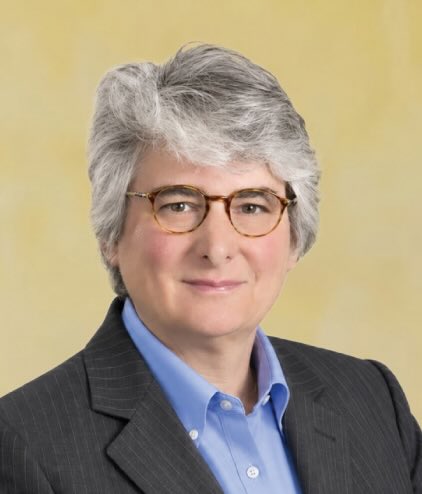 Debra R. Schoenberg
Owner & Founder
Debra R. Schoenberg
Owner & Founder


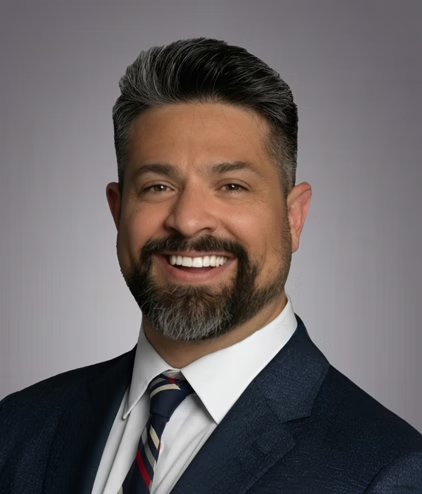




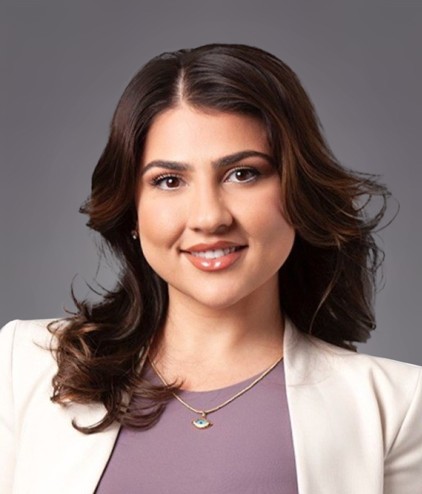 Kimia Kojouri
Associate
Kimia Kojouri
Associate



In California, the title is not the deciding factor. If an asset was purchased with community funds during the marriage, it is generally considered community property regardless of whose name is on the deed or account.
If you used "marital money" (like income earned during the marriage) toward the home, your spouse may be entitled to a share of the home’s increased value. Instead of the house staying 100% yours, the law views the marriage as having "invested" in the property. A specific formula is used to calculate exactly how much of that equity now belongs to the couple as a whole versus you as an individual.
Yes. While a judge is required to divide community property 50/50 at trial, spouses are free to negotiate an unequal split in a settlement agreement if it suits their specific needs or tax strategies.
The business is typically considered a community asset. A professional valuation is required to determine its worth, and one spouse may "buy out" the other’s interest to keep the business intact.
Generally, debts incurred during the marriage are community obligations, even if only one spouse’s name was on the card. However, there are exceptions for debt that did not benefit the community.
A lawyer uses the "discovery" process—including subpoenas, depositions, and forensic accounting—to trace money trails and ensure all assets are disclosed under penalty of perjury.
Yes, as long as it is not spent on community expenses. Once exhausted, there is no separate property credit available to claim.
A Qualified Domestic Relations Order (QDRO) is a legal document required to divide certain retirement plans, like a 401(k) or pension, without triggering early withdrawal penalties or immediate taxes.
No. California is a "no-fault" state. Misconduct by a spouse generally does not result in them receiving a smaller share of the assets, though "breach of fiduciary duty" (wasting or hiding community money) can be penalized.
The timeline varies based on the complexity of the estate. High-asset cases involving valuations and forensic tracing can take several months to over a year to resolve fully.