Voted #1 Family Law Firm in California
in a statewide poll limited to Judges, Attorneys, and Law Firm Administrators.
Request a Consultation

Most Californians will need a family law attorney or advice regarding a family law matter at some point in their lives. If you find yourself facing a family law issue, the Schoenberg Family Law Group, P.C. can help – no matter the complexity. Our team of Petaluma family law attorneys handles every aspect of family law, from prenuptial agreements and divorce to adoption and parentage. Call or contact our office online today to speak with attorneys who are:
The family law attorneys at the Schoenberg Family Law Group, P.C. stand beside you throughout any family-related legal matter from start to finish. We strive to meet your family law goals and expectations while doing the following and more on your behalf:
Reach out to the Schoenberg Family Law Group, P.C. for help resolving your family law disputes. We will use our more than thirty years of legal experience to navigate you through the family law process.
Family law is the area of state civil law governing divorce, marriage, child custody, adoption, paternity, domestic violence, and other topics relating to the family unit. Navigating the complexities of California’s family law system regularly requires the assistance of an experienced attorney.
To marry in Petaluma, both parties must enter into the marriage of their own free will and have a clear understanding of the nature of their marriage. Both parties must also be eighteen years or older, have parental consent, and be of sound mind.
Couples must obtain a marriage license within ninety days of marriage and return a signed marriage certificate within ten days of their marriage ceremony.
A prenuptial agreement is a contract spouses enter into before marriage. It defines property rights and duties during the marriage and in the event of a divorce or death. California prenuptial agreements must meet specific requirements to be upheld in court if challenged.
All California prenuptial agreements must be:
To file for a divorce in Petaluma, California, one spouse must be a resident of California for six months and live in the county where the divorce is filed for three months. There is a six-month waiting period to obtain a divorce in California without exception.
California is a community property state. This means all property and debts acquired during the marriage are subject to equal division by the court.
 Helpful and supportive
Debra and team were so helpful and supportive through the most difficult time in my life. Grateful to the team for their advice – would highly recommend their services to anyone needing a divorce attorney.
Child and spousal support are financial payments from one person to another to help them support their shared children or a spouse with a lower income, respectively. Child and spousal support are determined differently. There is a specific formula in California to determine the appropriate amount of child support. This formula determines a presumptive amount of child support according to the following information:
There is no set formula for determining spousal support. California courts must consider various factors to determine whether to award spousal support, what kind, and for how long. Some of the factors the courts consider include the earning capacity, health, and age of each spouse, the length of the marriage and the ability for a spouse to become self-supporting with additional education or training.
There are times when the court can consider future income or potential income when making support orders. For example, a judge may “impute” income if a party has attempted to minimize their income to avoid or reduce financial support payments. This allows the court to attribute income to a party even when they are not earning that amount.
Courts cannot generally force a person to leave their current line of work to make a more lucrative living, even if their earning capacity may be greater than their current income. They also do not usually penalize parties for accepting lower-earning positions for viable reasons, such as greater flexibility to parent their children, better benefits, or healthier work environments. However, courts can impute income in certain circumstances, such as when the person has the ability and opportunity to earn more and refuses to do so.
Often, this may come down to discerning whether a person is involuntarily or voluntarily unemployed or underemployed. Involuntary unemployment occurs when a person legitimately loses a job they wanted to keep and is unable to find a substitute position. For example, they may have been laid off instead of fired for misconduct at work. In contrast, a person may be voluntarily unemployed if they quit work or deliberately lowered their income. In such cases, the court may ignore the change in income and continue to maintain the amount of support as originally ordered.
In other cases, the court may impute a certain amount of income after determining the person’s earning capacity. A person’s earning capacity may be determined by reviewing factors such as their:
If a party believes the other spouse is artificially deflating their income, they can take steps to try to argue this to the court to get the court to impute income to that spouse. For example, they can demand evidence showing the other party has made legitimate efforts to obtain employment. Expert witnesses can prepare a report and provide testimony about potential available jobs and their accompanying salaries. A party can also request a certified vocational examination, which is provided by a qualified vocational counselor after reviewing relevant factors about the party in question. A lawyer can help you with obtaining the necessary evidence to establish your case.
To discuss your family law matter with an experienced Petaluma family law attorney, contact the Schoenberg Family Law Group, P.C. We will meet with you at your convenience to answer your questions and advise you of your next legal steps.
"I was seeking a reputable family law firm for my prenuptial agreement and received high praise for the Schoenberg Law Group. My attorney listened to my questions and responded to them very patiently. She also paid close attention all my concerns and made sure I was aware of the legal value of the agreement I was about to sign. It was…”
D.R.“It has been a real blessing to find this family law group in my life. I was in the middle of a custody battle with my ex wife and had a lawyer who had sided with my ex wife’s lawyer. I was faced with the option of paying to a regular lawyer to do half jobs with no results or to invest a bit more for a top family counselor who understood my situation and at the same time not giving me false hopes."
A.L."I hesitated filing papers for a long time because I was not sure if I could survive a long legal battle. When we were married, my husband worked while I raised the children, two under four years old, and I was afraid I would lose the stability they needed. I had a wonderful group of friends that helped me search for a reputable law firm that could represent me when my focus was on my children. They found the"
L.A.We are trial lawyers who litigate high-conflict, high-stakes cases. While we try to build on mediation efforts and exhaust opportunities for a negotiated agreement, emotions, egos and various other realities often force these disputes into court. It is critical to work with a firm that knows how to apply the law and the facts in your favor, whether in the courtroom or at the negotiating table.
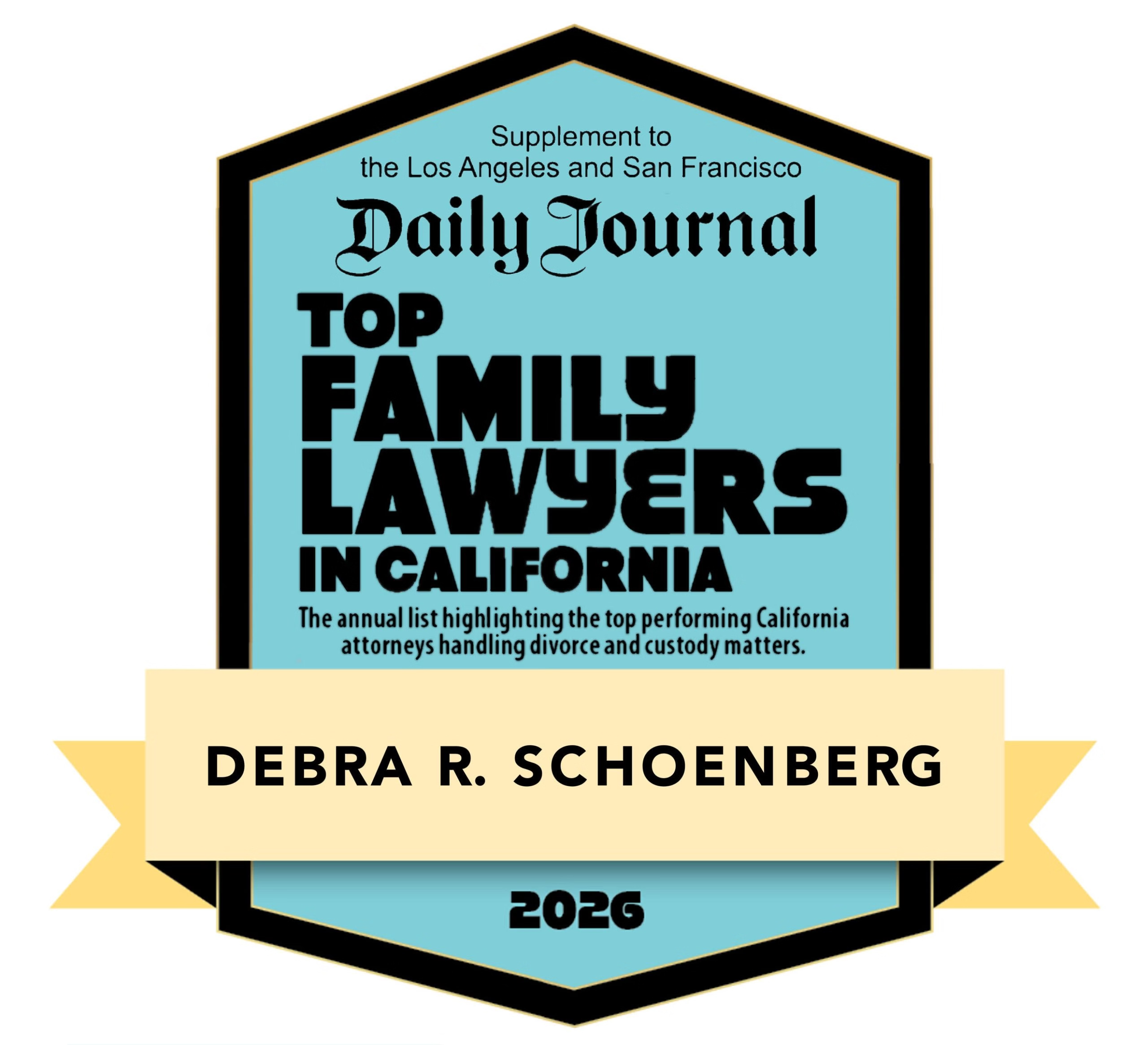
One of California’s Top Family Lawyers for five consecutive years: 2022–2026

SFLG Voted #1 Family Law Firm in California for six consecutive years: 2021 - 2026

One of the Best Places to Work in the Bay Area by San Francisco Business Times

Debra Schoenberg was named a Fellow of the American Academy of Matrimonial Lawyers (AAML)

Designated as a Certified Family Law Specialist by the State of California Board of Legal Specialization

Board-Certified Family Law Trial Specialist by The National Board of Trial Advocacy (NBTA)
“My goal is to preserve your dignity and your humanity throughout what can be a very difficult and painful process, while at the same time achieving a favorable outcome on your behalf.”
Over 400 Years of Collective Family Law Experience
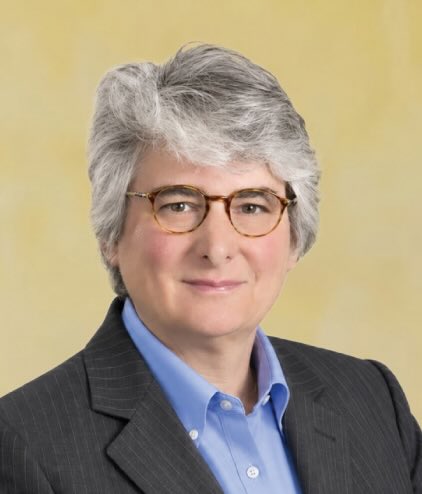 Debra R. Schoenberg
Owner & Founder
Debra R. Schoenberg
Owner & Founder









 Kimia Kojouri
Associate
Kimia Kojouri
Associate