Voted #1 Family Law Firm in California
in a statewide poll limited to Judges, Attorneys, and Law Firm Administrators.
Request a Consultation


 Ending a marriage or domestic partnership in Santa Cruz and the surrounding Bay Area can be difficult, emotional, and complex. Even the most amicable divorces can quickly turn contentious, putting a mental and emotional strain on both spouses and children alike. We are certified specialists in all matters related to Santa Cruz family law.
Having a compassionate, experienced legal professional by your side effectively alleviates this stress and uncertainty. If you are exploring your options for divorce, please consult Schoenberg Family Law Group, P.C., to discuss your situation. We understand that divorce can be both complicated and stressful for everyone involved. Our experienced Santa Cruz divorce attorneys can help you devise comprehensive legal strategies to assist you through the process.
At Schoenberg Family Law Group, P.C., we maintain complete transparency and open lines of communication to address your concerns effectively. We detail our strategies based on your unique needs through every step of the dissolution process. Our team of legal professionals has intimate knowledge of all aspects of divorce, including:
Our lead attorney, Debra R. Schoenberg, holds the title of Certified Family Law Specialist. She has undergone additional education and training and successfully passed a written examination focusing on family law, earning certification from the State Board of Legal Specialists as a specialist in this field. She was named a Fellow of the American Academy of Matrimonial Lawyers (AAML) and is a Board-Certified Family Law Trial Specialist by The National Board of Trial Advocacy (NBTA).
By utilizing our comprehensive knowledge of family law in Santa Cruz and maintaining an open line of communication at all times, we aim to alleviate the stress from your divorce, giving you peace of mind during a tumultuous phase of your life.
Before starting the filing process for dissolution, there may be other, more appropriate options for separation based on your circumstances. The state of California provides three ways to terminate a marriage or registered domestic partnership officially:
The Santa Cruz divorce attorney team at Schoenberg Family Law Group, P.C., has extensive knowledge of all your divorce options, ensuring that you are well informed of your choices before officially beginning the dissolution process. We understand that this decision may have far-reaching ramifications for you and your family, so we provide you with all the necessary information to make an informed decision.
Nullifying your marriage means to invalidate it. Rather than dissolving the marriage, an annulment makes it like it never happened. It states the marriage was invalid from the start due to issues such as fraud or coercion. Grounds for nullification include if one of the spouses was already married at the time of the second marriage, unsound mind, fraud, deceit, coercion, force, physical incapacity preventing consummation, or one spouse being too young to marry legally.
Dissolution of marriage is the legal term for divorce. It is the formal ending of a marriage by court decree. Unlike annulment, dissolution does not erase a marriage as if it never existed. The marriage will still exist on record but will be formally ended. The dissolution process involves serving divorce papers on one spouse, negotiating the divorce terms, potentially going to trial, and getting a judge to sign the official decree ending the marriage.
In Santa Cruz, legal separation means the couple will technically remain married but live in separate households. They will still retain all the benefits of marriage, including health care benefits. Both spouses will retain their married status on paper, meaning they cannot remarry unless they proceed with a dissolution. It is possible to receive payments from one spouse for spousal support during a legal separation. A divorce lawyer can help guide you through this complex process.
California is a “no-fault” state, meaning a spouse must not demonstrate wrongdoing to file for divorce. Additionally, both spouses do not need to agree to a divorce for the process to begin.
In California, each type of separation has specific residency requirements to file.
California law mandates a 6-month waiting period before a divorce can be finalized. This waiting period begins when the person filing for divorce officially serves their spouse. It’s important to note that these are general requirements for divorce and separation in California.
There may be other specific laws and requirements to follow before officially starting the divorce process. Schoenberg Family Law Group, P.C. can help clarify any such laws and ensure these requirements are met before you initiate divorce proceedings. If you’d like to discuss the details of your case, contact us today.
Since California is a no-fault divorce state, the most commonly cited reason for a dissolution of marriage or domestic partnership is irreconcilable differences. Irreconcilable differences mean that two spouses have experienced a breakdown of the marriage that they cannot repair, which can refer to various circumstances, from drifting apart to having different family values. The California courts do not require proof of irreconcilable differences; one spouse must cite this as the grounds for divorce when filing the paperwork.
Different states handle property division during a divorce case in unique ways. California is a community property state, meaning a judge will divide property equally between the spouses, regardless of fault for the divorce or the individual circumstances of each spouse. In California, a judge will order a 50/50 split of all property acquired during the marriage (community property) and all debts accumulated during the marriage. Factors such as each spouse’s income, education level, age, health, disability, or the length of the marriage will not influence property division decisions in California. These factors will, however, affect spousal support decisions.
Community property includes all assets, income, and properties the couple acquired together during the marriage. It does not include separate property or items each spouse owned before the marriage.
Community property excludes items explicitly given to one spouse as gifts or inheritance. Community property can include real estate, bank accounts, savings, retirement funds, 401(k)s, jewelry, vehicles, businesses, artwork, investments, household items, pets, and debts.
Before splitting everything equally, the divorce courts will allow the couple to work out a different property division arrangement. A judge typically approves the arrangement if the couple can compromise and agree on a property division plan. However, if the spouses cannot agree on property division, the case will go to a family court judge, who will divide the property equally under California’s property division laws.
A lawyer from Schoenberg Family Law Group, P.C. can help you with property division and financial asset organization during mediation or a divorce trial in Santa Cruz. We have extensive experience handling these matters.
If you and your spouse share a child, your divorce or separation will be more complex than for couples without children. You must address issues such as custody, visitation, and child support. A judge will first allow parents to create a parenting plan independently before intervening. You and your spouse can work together, with or without the help of a mediator, to create a plan for child custody, visitation, and financial support.
Your parenting plan should be detailed, including how much time the child will spend with each parent, where the child will spend weekends and holidays, whether both spouses will retain legal responsibilities for the child, visitation rights, and whether one spouse will pay the other child support. If you and your spouse cannot agree on a parenting plan and custody arrangement, the matter will go to court.
In a custody case, a judge prioritizes the child’s best interests. Factors such as criminal convictions, a history of domestic violence, substance abuse, the child’s relationship with each parent, each parent’s contributions to the child’s upbringing, the child’s wishes, and more may be considered. Ultimately, the judge will decide what is best for the child.
A lawyer at Schoenberg Family Law Group can help you present your case for custody, visitation, and child support during a divorce trial in Santa Cruz.
Mediation can help couples resolve issues outside of the courtroom with the assistance of an impartial third party. This option allows spouses to discuss their disputes and reach a resolution. Unlike judges, mediators do not make decisions. Even if you believe resolving a separation out of court is the best route for you, it is still recommended to seek counsel from a qualified Santa Cruz family law attorney who can guide you through the process. Schoenberg Family Law Group, P.C. will support your decision to pursue resolutions outside of the courtroom and provide the best possible consultation to ensure an amicable split.
Schoenberg Family Law Group, P.C. has nearly 40 years of experience in all matters of family law and divorce. We provide valuable counsel that caters to your unique needs, ensuring that you and your children are a priority throughout the separation process.
Our Santa Cruz divorce attorneys understand the significant impact of a divorce on a family and strive to give you peace of mind through complete transparency and open, honest communication. If you have any questions regarding your divorce, please contact us online or call us.
"I was seeking a reputable family law firm for my prenuptial agreement and received high praise for the Schoenberg Law Group. My attorney listened to my questions and responded to them very patiently. She also paid close attention all my concerns and made sure I was aware of the legal value of the agreement I was about to sign. It was…”
D.R.“It has been a real blessing to find this family law group in my life. I was in the middle of a custody battle with my ex wife and had a lawyer who had sided with my ex wife’s lawyer. I was faced with the option of paying to a regular lawyer to do half jobs with no results or to invest a bit more for a top family counselor who understood my situation and at the same time not giving me false hopes."
A.L."I hesitated filing papers for a long time because I was not sure if I could survive a long legal battle. When we were married, my husband worked while I raised the children, two under four years old, and I was afraid I would lose the stability they needed. I had a wonderful group of friends that helped me search for a reputable law firm that could represent me when my focus was on my children. They found the"
L.A.We are trial lawyers who litigate high-conflict, high-stakes cases. While we try to build on mediation efforts and exhaust opportunities for a negotiated agreement, emotions, egos and various other realities often force these disputes into court. It is critical to work with a firm that knows how to apply the law and the facts in your favor, whether in the courtroom or at the negotiating table.
One of California’s Top Family Lawyers for five consecutive years: 2022–2026

SFLG Voted #1 Family Law Firm in California for six consecutive years: 2021 - 2026

One of the Best Places to Work in the Bay Area by San Francisco Business Times

Debra Schoenberg was named a Fellow of the American Academy of Matrimonial Lawyers (AAML)
Designated as a Certified Family Law Specialist by the State of California Board of Legal Specialization

Board-Certified Family Law Trial Specialist by The National Board of Trial Advocacy (NBTA)
“My goal is to preserve your dignity and your humanity throughout what can be a very difficult and painful process, while at the same time achieving a favorable outcome on your behalf.”
Over 400 Years of Collective Family Law Experience
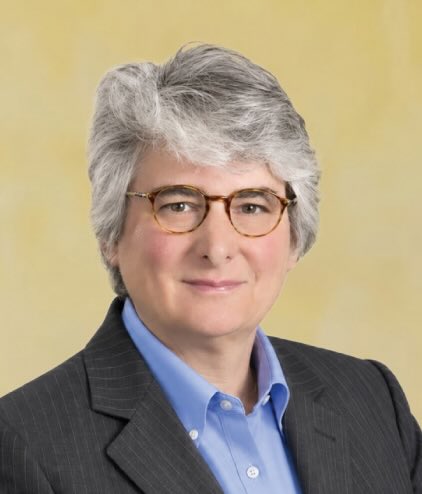 Debra R. Schoenberg
Owner & Founder
Debra R. Schoenberg
Owner & Founder


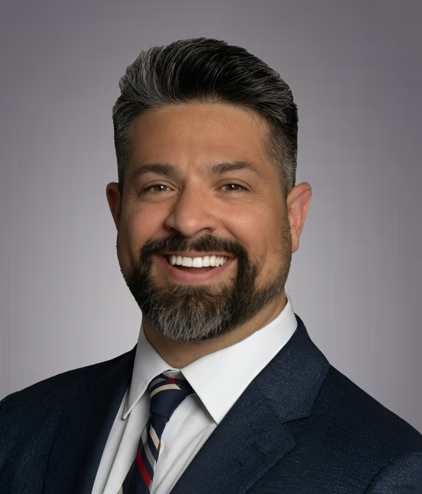
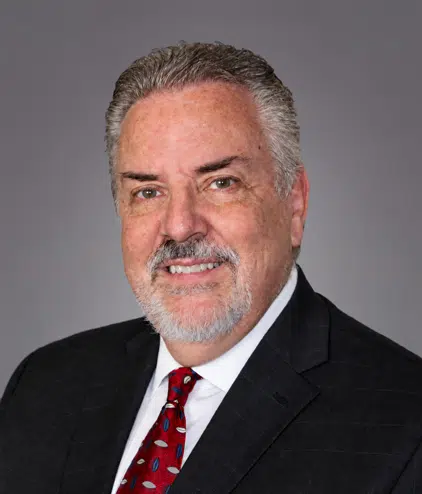


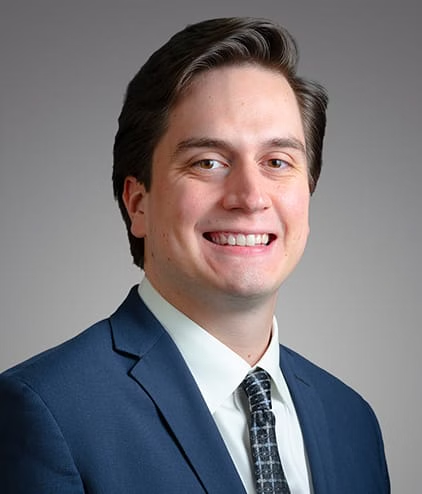


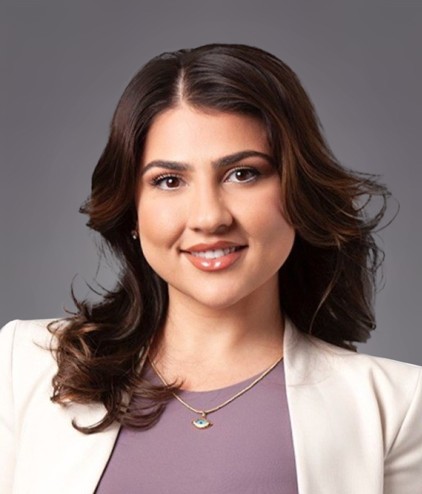 Kimia Kojouri
Associate
Kimia Kojouri
Associate