Voted #1 Family Law Firm in California
in a statewide poll limited to Judges, Attorneys, and Law Firm Administrators.
Request a Consultation
At The Schoenberg Family Law Group, P.C., we use an individualized approach. Our focus is meeting your expectations, protecting your interests, calming your fears, and providing you with the sound advice you need. Let an experienced Mountain View Divorce Attorney manage your divorce, child custody, and child support issues. We will treat you with the respect you deserve and keep all of your information confidential.
Speak with one of our attorneys today about any divorce issue, including the following:
At The Schoenberg Family Law Group, P.C., we want to serve you so you can meet your family’s needs. No matter what stage of the divorce process you are in, you can count on our Mountain View family law attorneys for support and guidance.
Acclaimed Legal Leaders: Our firm is regularly recognized by the legal community’s most rigorous ranking organizations, including Super Lawyers, U.S. News & World Report Best Law Firms, and the American Institute of Family Law Attorneys.
A family law attorney in Mountain View will know exactly how to navigate your divorce case for the best possible outcome. Your attorney will work toward your goals using proven legal strategies and tactics while you focus on your future. A law firm will also have exceptional resources to help support your divorce case, such as connections to experts and assistants who can make the divorce filing process easy.
When you hire a divorce attorney, you protect yourself and your rights with a strong legal representative who is obligated to serve your best interests. Your lawyer can increase the odds of reaching a divorce settlement and avoiding a long and costly trial. Your lawyer can also decrease the emotional stress that divorce takes on you and your family, such as by addressing your concerns. Working with an experienced divorce lawyer in Mountain View can result in a more positive case outcome and a better overall legal experience for your family.
One of the steps toward getting a divorce in Mountain View is making sure that this is the right option for you. Some couples find that legal separation is a better alternative for various reasons. If you wish to retain some of the benefits associated with being married, for example, such as insurance benefits or health care, legal separation can allow you to live your own life while still receiving these benefits, as you will remain married on paper.

There are other legal options besides divorce and legal separation. You may qualify for an annulment, for example, meaning that in the eyes of the law, your marriage never happened. Nullifying a marriage invalidates the union, restoring you to “single” status. An annulment may be an option if your marriage was never legally valid, such as in a case involving bigamy, incest, one or more parties who were under the age of 18 and did not have parental permission to marry, fraud, or coercion.
Local Court and Financial Disclosures in Mountain View: Although you live in Mountain View, your divorce petition will be filed with and processed by the Family Law Division of the Santa Clara County Superior Court, with primary hearings taking place at the Family Justice Center Courthouse in San Jose. Because divorces in the Mountain View area frequently involve tech professionals with complex compensation structures, navigating a dissolution here requires an attorney with local experience and a deep understanding of how tech equity, unvested stocks, and corporate benefits are treated under California’s community property laws.
In California, neither spouse is at fault for a divorce. Instead, marriages end due to irreconcilable differences or an irreparable breakdown of the marriage. This makes California a “no-fault” divorce state.
There are residence requirements to divorce in California. One spouse must reside in California for six months before filing for a divorce. They must also live in the county in which they file for divorce for three months before filing.
The residency mandates do not apply to same-sex couples married in California but living in a state that does not recognize same-sex divorce. However, the California divorce orders may not be enforceable in the home states of these couples.
When spouses cannot meet minimum California residency requirements, they may file for legal separation then amend their filing to divorce once they meet residency requirements. No divorce is final until ordered so by a judge. The minimum waiting period for a divorce is six months.
 Helpful and supportive
Debra and team were so helpful and supportive through the most difficult time in my life. Grateful to the team for their advice – would highly recommend their services to anyone needing a divorce attorney.
A divorce in Mountain View will either be contested or uncontested. The difference lies in whether you and your spouse can work together to craft the terms of your divorce. If you are able to agree on all the major issues – every single detail of your divorce case – you will have an uncontested divorce. Otherwise, your divorce will be contested.
With an uncontested divorce, you and your spouse will retain autonomy over the decisions of your case. You and your spouse will have the power to determine things such as child custody, child support, visitation and property division. If you can both compromise on these matters, a judge in Santa Clara will sign off on the settlement you create without you needing to go to trial. Achieving an uncontested divorce can save you time and money by keeping you out of the courtroom. It can also help you keep your divorce more private and confidential.
If you cannot agree together on the terms of your divorce, you and your spouse will have a contested divorce case. You will need to go before a judge in Santa Clara and allow him or her to determine the terms of the dissolution in this case. The final decisions will be out of your hands. Do not let your spouse pressure you to agree to his or her terms, however. Use an attorney to help you negotiate while protecting your rights.
When California courts make child custody decisions, their primary focus is the best interests of the children and the custodial parent’s ability to care for the child. There are two types of custody in California, physical and legal.
Legal custody pertains to the ability to make essential decisions in the child’s life, such as healthcare, religious, and educational matters. Physical custody is simply with which parent the child physically lives or stays.
Courts evaluate child custody using the following criteria:
Courts give no preference to a parent when awarding custody due to their sex, lifestyle, sexual orientation, or religion.
Every parent has a legal responsibility to support their child(ren). Child support is a court-ordered monthly payment to cover the expenses of rearing a child. Family law judges use California child support guidelines when determining child support orders.
The amount of time each parent physically spends with the child and parents’ income levels determines support amounts. Parents’ are legally bound to support a child through:
If a child is disabled or cannot support themselves, the court may order the parents to provide continuous support for that child.
In California, all property is separate property or community property. Property acquired after the marriage is owned together and subject to equal division. Anything owned before the marriage, obtained after a legal separation or received as an inheritance or gift, is separate property.
Community property includes the following:
The spouses may agree on another division of property in an uncontested divorce. If the couple cannot agree on property division and the case goes to trial, California’s community property law will split all marital assets and debts in half, 50/50, whether or not this is fair for either party.
Spousal support, also known as alimony, is a series of payments made by one spouse to the other both during and after the court finalizes the divorce. The purpose of spousal support is to allow the lower-earning spouse to maintain a similar standard of living to the one they enjoyed prior to the divorce.
California courts have the power to order temporary, rehabilitative or permanent spousal support.
In any spousal support case, one spouse needs support, and the other spouse has the ability to pay support. Without these two factors, the court will not entertain a request for spousal support.
The length of time your divorce in Mountain View will take from start to finish depends on the specific circumstances of the case. One of the largest factors is whether you have a contested vs. uncontested divorce. A contested divorce will take longer, as you will need to wait for an opening in the courts for your trial date. Many other factors could also play a role in how long your case takes, such as California’s waiting period. A lawyer can give you a timeline tailored to your specific case.
Your divorce will take at least six months in California, as no couple can avoid the six-month waiting period. If you need longer to negotiate the terms of your divorce or carry out a divorce trial, your case could take one to two years or longer to complete. Hiring an attorney can help you keep your divorce as efficient as possible. Your lawyer will take care of filing requirements and confusing paperwork for you, as well as work with you and your spouse to facilitate faster and more successful compromises. Ask an attorney from The Schoenberg Family Law Group, P.C. for a custom timeline of your particular case.
Before starting your divorce case in Mountain View, take the following steps, if you can, to protect your legal rights and help ensure a more positive case outcome:
At The Schoenberg Family Law Group, P.C., our attorneys are experienced advocates who will provide you with the effective guidance and representation you deserve. We care about your family and your future and work hard to keep you informed at all times. Contact us today!
We will compassionately listen to your issues and champion your cause, whether it is protecting your children, achieving a just financial outcome, or navigating the divorce process efficiently. The Schoenberg Family Law Group, P.C., is here for you.
"I was seeking a reputable family law firm for my prenuptial agreement and received high praise for the Schoenberg Law Group. My attorney listened to my questions and responded to them very patiently. She also paid close attention all my concerns and made sure I was aware of the legal value of the agreement I was about to sign. It was…”
D.R.“It has been a real blessing to find this family law group in my life. I was in the middle of a custody battle with my ex wife and had a lawyer who had sided with my ex wife’s lawyer. I was faced with the option of paying to a regular lawyer to do half jobs with no results or to invest a bit more for a top family counselor who understood my situation and at the same time not giving me false hopes."
A.L."I hesitated filing papers for a long time because I was not sure if I could survive a long legal battle. When we were married, my husband worked while I raised the children, two under four years old, and I was afraid I would lose the stability they needed. I had a wonderful group of friends that helped me search for a reputable law firm that could represent me when my focus was on my children. They found the"
L.A.We are trial lawyers who litigate high-conflict, high-stakes cases. While we try to build on mediation efforts and exhaust opportunities for a negotiated agreement, emotions, egos and various other realities often force these disputes into court. It is critical to work with a firm that knows how to apply the law and the facts in your favor, whether in the courtroom or at the negotiating table.
One of California’s Top Family Lawyers for five consecutive years: 2022–2026

SFLG Voted #1 Family Law Firm in California for six consecutive years: 2021 - 2026

One of the Best Places to Work in the Bay Area by San Francisco Business Times

Debra Schoenberg was named a Fellow of the American Academy of Matrimonial Lawyers (AAML)
Designated as a Certified Family Law Specialist by the State of California Board of Legal Specialization

Board-Certified Family Law Trial Specialist by The National Board of Trial Advocacy (NBTA)
“My goal is to preserve your dignity and your humanity throughout what can be a very difficult and painful process, while at the same time achieving a favorable outcome on your behalf.”
Over 400 Years of Collective Family Law Experience
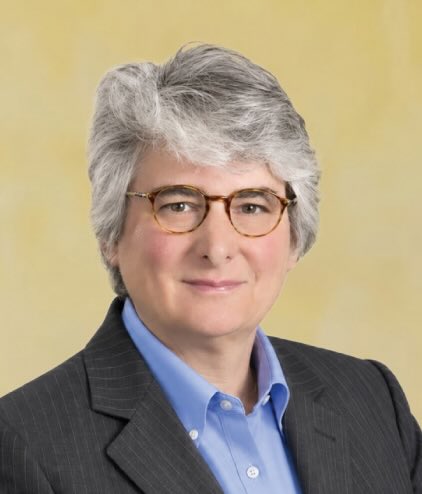 Debra R. Schoenberg
Owner & Founder
Debra R. Schoenberg
Owner & Founder









 Kimia Kojouri
Associate
Kimia Kojouri
Associate




Divorce and family law cases for residents of Mountain View are handled by the Family Law Division of the Santa Clara County Superior Court. The administrative filings, court-ordered mediations, and judicial trials are primarily conducted at the Family Justice Center Courthouse located at 201 N. First Street in San Jose.
Under California community property law, stock options and Restricted Stock Units (RSUs) granted or vested during the marriage are considered jointly owned by both spouses and are subject to an equal split in divorce. Determining what portion belongs to the community and what should be categorized as separate property requires applying complex legal time-rule formulas, such as the Hug or Nelson allocations, depending on when the equity was granted and when it vests.
No, a divorce in California cannot legally be finalized in less than six months. California mandates a strict, non-waivable six-month waiting period that begins the day the Respondent is officially served with the divorce petition. Even if you and your spouse reach an immediate agreement on all terms, the court will not restore your single status until this timeframe expires.
Temporary spousal support is awarded during the divorce process to help the lower-earning spouse cover immediate living expenses until a final judgment is reached, and is typically calculated using a standardized court formula. Permanent (or long-term) spousal support is determined at the end of the case after a judge evaluates a variety of statutory factors, including the length of the marriage and each party's earning capacity.
If your spouse refuses to sign or respond to the divorce papers, your case will not be blocked; instead, it will proceed as a default divorce. Once the 30-day response window closes after service, you can request a true default or enter into a default with a written agreement, allowing a Santa Clara County judge to sign off on your orders without your spouse's active participation.
Yes, California's community property rules apply to both assets and liabilities. Any debts accumulated by either spouse during the marriage—such as credit card balances, mortgages, car loans, or student debt—are legally considered community debt and are divided equally upon divorce, regardless of whose name is on the account or who spent the funds.