Voted #1 Family Law Firm in California
in a statewide poll limited to Judges, Attorneys, and Law Firm Administrators.
Request a Consultation
The Schoenberg Family Law Group, P.C., is here for you when you need guidance and support in your child custody and visitation matters. A Mountain View Child Custody Lawyer will work diligently to protect your parental rights and the best interests of your child or children. We will explain the child custody process to you and tell you how you can take an active, decisive role in your child custody case.
Whether you are married and divorcing or were never married, we have the skills and experience to resolve your child custody issues. Contact our office in Mountain View today to schedule a confidential child custody consultation regarding any child custody problem, including but not limited to, the following:
Child custody is a complicated and emotionally charged legal matter. The best way to handle a child custody case in Mountain View is by hiring an attorney to represent you and protect your rights as a parent. An attorney can answer your legal questions about child custody and child support, as well as give you an accurate and honest overview of your situation. Then, your lawyer will use proven legal strategies to fight for the child custody arrangement that is best for you and your children. Attorney Debra R. Schoenberg has years of experience and expertise in highly sensitive topics in family law, including child custody.
You may need a Mountain View child custody lawyer for more than just a divorce or legal separation case. Which parent or guardian has custodial rights over a child is an important issue in many types of family law cases. At Schoenberg Family Law Group, P.C., we have years of experience advising and representing families throughout California in child custody matters. We understand how to approach many types of cases involving child custody, including:

Mandatory Santa Clara County Custody Mediation: If you reside in Mountain View, any court-ordered child custody hearings or trials will be administered by the Family Law Division of the Santa Clara County Superior Court, primarily located at the Family Justice Center Courthouse in San Jose. Under local court rules, before a judge will hear a contested custody motion, both parents are legally required to participate in a mandatory, court-facilitated mediation process through Family Court Services (FCS) to attempt to draft a mutual parenting plan.
Child custody refers to the rights and responsibilities of parents for their children. In California, the courts award custody based upon the best interests standard.
To decide what is in a child’s best interests, courts review the following:
The court gives no preference to the mother or father when awarding custody, regardless of a child’s age or sex. Courts cannot deny custody or visitation based on marriage, physical disability, lifestyle, religious belief, or sexual orientation.
In most child custody cases, the courts permit the child’s parents to come up with their own plan for custody and visitation before requiring a judge to intervene. The parents are given the opportunity to create a parenting plan or custody arrangement alone. If the agreement protects the best interests of the child, a judge will sign off without any further hearings or meetings necessary. When parents cannot agree on a custody plan in the best interests of their children alone or at mediation, the judge decides on their behalf.
In a judge’s custody decision, there are two types of child custody, legal and physical. The parent or parent(s) with legal custody, make essential decisions for their children, such as medical care, religious upbringing, residence, and education. Physical custody pertains to the parent with whom the child primarily resides.
Parents can share legal custody, or one parent can exercise sole legal custody. Physical custody is either shared or held solely by one parent. Usually, the parent whom the child primarily resides with is called the custodial parent. The other parent – the parent without primary custody or with visitation rights – is referred to as the noncustodial parent.
The other custody decision is how to divide parenting time. California permits both shared and sole custody of children.Shared or joint custody means that both parents divide physical custody between them after a divorce. This does not necessarily mean a 50/50 split. It can mean a 75/25 time-sharing plan, 60/40 joint custody or any number of other combinations. The amount of time that a child spends with each parent depends on the unique circumstances and what is best for the child.
Sole custody means that one parent is given 100 percent of the physical custody of a child (and normally legal custody, as well). This is not the most common custody arrangement in California, as the courts generally hold that a child is better off after a divorce when he or she can maintain meaningful and continuing contact with both parents.
Joint custody arrangements are more common in Mountain View than sole custody decisions. However, if it would be in the best interest of the child not to stay with one parent – such as in a case involving domestic violence, substance abuse or incarceration – the other parent can receive sole custody. The noncustodial parent in this situation may or may not have visitation rights.
When parents do not share physical custody, the parent without physical custody receives visitation. Visitation orders are dependent on the best interests of the children and the situation of the parents. There are various visitation orders, including the following:
Again, the law requires that judges grant custody according to what is in the “best interest of the child.” As a situation changes, the noncustodial parent can petition the courts to modify a visitation or custody arrangement. A parent without visitation, for example, may be able to regain some visitation rights if he or she can prove to the courts that this is in the best interest of the child.
In California, parenting plans outline child custody. This is a document describing the legal custody and physical custody arrangement between parents, along with any visitation or time-share plan.
The goal of a parenting plan is to minimize conflict and disagreement regarding children’s schedules and provide children with a consistent schedule. Parenting plans are only enforceable court orders once signed by both parents, their attorneys, and the court.
Parenting plans require a lot of thought and need to focus on the children’s best interests. Items to consider when making a parenting plan include children’s:
Parents and the court should easily understand parenting plans. They should also be flexible to accommodate unforeseeable events like illness.
Unless there is domestic violence or another form of abuse, a parenting plan has stipulations regarding:
Above all, children benefit from consistent parenting plans that allow quality time with each parent.
As children age and years pass, parenting plans become outdated and obsolete. Children take on new interests and activities, and parents remarry, move, and start new jobs. These changes often call for a modification of the original parenting plan.
If parents agree on changing their parenting plan, they can do so with the court by an agreement. If not, a new court action is necessary for a child custody modification. To modify a custody order, the court requires that a significant change of circumstances has taken place since the last custody order and that significant change affects the children’s best interests.
A final custody order is modifiable only when it is in the best interests of the children and needed to preserve a stable and consistent custody arrangement with their parents.
The Schoenberg Family Law Group, P.C., wants to help you with your child custody case. We will provide you with sophisticated Mountain View family law counsel who are compassionate and responsive to your legal needs and concerns. We will craft a litigation plan developed with strategies personalized to meet your unique needs and goals.
Allow us to provide you with the excellent service, and real solutions you deserve by calling and scheduling a confidential consultation today.
"I was seeking a reputable family law firm for my prenuptial agreement and received high praise for the Schoenberg Law Group. My attorney listened to my questions and responded to them very patiently. She also paid close attention all my concerns and made sure I was aware of the legal value of the agreement I was about to sign. It was…”
D.R.“It has been a real blessing to find this family law group in my life. I was in the middle of a custody battle with my ex wife and had a lawyer who had sided with my ex wife’s lawyer. I was faced with the option of paying to a regular lawyer to do half jobs with no results or to invest a bit more for a top family counselor who understood my situation and at the same time not giving me false hopes."
A.L."I hesitated filing papers for a long time because I was not sure if I could survive a long legal battle. When we were married, my husband worked while I raised the children, two under four years old, and I was afraid I would lose the stability they needed. I had a wonderful group of friends that helped me search for a reputable law firm that could represent me when my focus was on my children. They found the"
L.A.We are trial lawyers who litigate high-conflict, high-stakes cases. While we try to build on mediation efforts and exhaust opportunities for a negotiated agreement, emotions, egos and various other realities often force these disputes into court. It is critical to work with a firm that knows how to apply the law and the facts in your favor, whether in the courtroom or at the negotiating table.

One of California’s Top Family Lawyers for five consecutive years: 2022–2026

SFLG Voted #1 Family Law Firm in California for six consecutive years: 2021 - 2026

One of the Best Places to Work in the Bay Area by San Francisco Business Times

Debra Schoenberg was named a Fellow of the American Academy of Matrimonial Lawyers (AAML)

Designated as a Certified Family Law Specialist by the State of California Board of Legal Specialization

Board-Certified Family Law Trial Specialist by The National Board of Trial Advocacy (NBTA)
“My goal is to preserve your dignity and your humanity throughout what can be a very difficult and painful process, while at the same time achieving a favorable outcome on your behalf.”
Over 400 Years of Collective Family Law Experience
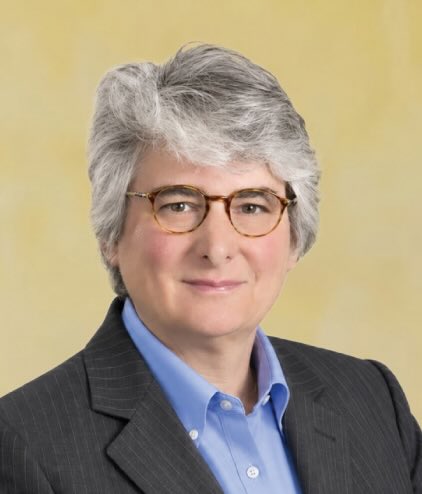 Debra R. Schoenberg
Owner & Founder
Debra R. Schoenberg
Owner & Founder









 Kimia Kojouri
Associate
Kimia Kojouri
Associate





Mountain View parents participate in mandatory court-ordered custody mediation through Family Court Services (FCS), which is located at the Santa Clara County Family Justice Center Courthouse at 201 N. First Street in San Jose. This mediation is a required step before a family law judge will rule on any contested parenting schedules.
Santa Clara County utilizes a tiered mediation system. Tier 1 is a completely confidential session where a neutral mediator helps parents voluntarily build a parenting plan. If no agreement is reached, the case may proceed to Tier 2, which is a non-confidential, fact-finding process where the mediator assesses the situation and may provide specific reporting or information to assist the judge in making a final custody ruling.
A parent cannot permanently relocate a child outside of the immediate area or out of state without either a written agreement from the other parent or a formal "move-away" order from a Santa Clara County judge. The court evaluates relocation requests based on whether the move is made in good faith and how it will ultimately impact the child's emotional stability, schooling, and ongoing relationship with the non-moving parent.
In California, a child never has the absolute legal right to choose their custodial parent; however, under Family Code Section 3042, if a child is of "sufficient age and capacity to form an intelligent preference" (typically age 14 or older), the court must permit the child to address the judge or express their custody preferences, unless doing so is deemed harmful to their well-being.
Silicon Valley’s intense corporate work hours and business travel schedules are routinely accommodated by crafting highly customized, flexible parenting plans. Local judges focus on a parent's capacity to provide a stable routine rather than penalizing demanding work hours, frequently integrating provisions such as the "right of first refusal" or detailed virtual visitation clauses into the final agreement.
To legally modify a final, permanent child custody order in Mountain View, a parent must demonstrate a "substantial change in circumstances" affecting the child's daily life. Common examples that meet this legal threshold include an involuntary corporate relocation, severe parental alienation, chronic scheduling instability, substance abuse issues, or shifting educational and medical needs as the child matures.