Voted #1 Family Law Firm in California
in a statewide poll limited to Judges, Attorneys, and Law Firm Administrators.
Request a Consultation


 Going through a divorce or separation in Carmel can be an emotionally charged and highly sensitive ordeal. With numerous factors to consider, the process can quickly become complicated. What starts as an amicable split can turn contentious, and what should be straightforward can consume your life with stress and uncertainty about your future. Our Carmel divorce lawyers are ready to assist you throughout the divorce process.
Having knowledgeable, experienced legal counsel by your side is invaluable in such volatile circumstances. Schoenberg Family Law Group, P.C., has the expertise, experience, and compassion to help you navigate even the most complex divorces in the Bay Area and throughout California. We proudly represent clients throughout Carmel, including those in nearby areas like Pacific Grove, Monterey, Pebble Beach, and Seaside.
You might need a divorce lawyer in Carmel if you have a complex case. If your divorce or dissolution involves high-value property, complicated assets, a business, children, pets, conflict, or other factors that will complicate matters, a lawyer can help. Our attorneys can guide you down the correct path for your divorce, whether that is mediation or trial. If you find out your spouse has hired a lawyer, it is usually an indicator that you should also hire one. Contact an attorney if you have any questions or concerns about your divorce.
Our attorneys are well-equipped with the education, experience, knowledge, and resources to be a formidable ally throughout your divorce proceedings. We work with you to consult, advise, and develop comprehensive legal strategies devised specifically for your unique circumstances and situations.
Throughout the dissolution process, we are professional, thorough, compassionate, and sympathetic to your needs. We communicate our intentions through every step of the process, informing you of our decisions and strategies. Our legal team is well-versed in all divorce situations and any other peripheral issues that may arise, including:
Our lead attorney, Debra R. Schoenberg, holds the title of Certified Family Law Specialist. She has undergone additional education and training and successfully passed a written examination focusing on family law, earning certification from the State Board of Legal Specialists as a specialist in this field. She was named a Fellow of the American Academy of Matrimonial Lawyers (AAML) and is a Board-Certified Family Law Trial Specialist by The National Board of Trial Advocacy (NBTA).
We utilize our comprehensive knowledge of family law to give our clients peace of mind during what could be a monumentally stressful experience and the security to recognize that they are in good hands.
Before filing for a divorce, you may consider other, more practical options for separation. In California, there are three main ways to terminate a marriage or registered domestic partnership.
Divorce is the most commonly known method of separation. You may file for divorce if you claim “irreconcilable differences” with your spouse, which is an official dissolution of your marriage. Once the divorce is finalized, you are considered single in the eyes of the court.
Legal separation is an alternative for those who do not want to proceed with a complete dissolution of their marriage. It does not officially end the marriage, so you cannot remarry or enter into a domestic partnership if you are legally separated. Legal separation is a viable solution for those who do not want to get a divorce due to religious reasons, personal beliefs, or plans to reconcile.
An annulment is a declaration by a court that your marriage is legally invalid. Essentially, it is as if the marriage never happened. In California, marriages are not valid if they are incestuous, bigamous, or do not follow standard marriage laws such as minimum age requirements. An annulment may also be requested if the marriage occurred due to coercion, fraud, or other forms of incapacitation.
At Schoenberg Family Law, P.C., we are committed to providing you with all the information necessary to decide to terminate your marriage or domestic partnership. We understand the gravity of the situation and exercise open communication and full transparency to ensure you are fully informed of all your options.
Regardless of the type of marriage termination, several requirements must be met before beginning the divorce process. It’s important to note that there may be residency requirements based on which avenue of marriage termination you choose.
For divorce, you must have resided in California for the last six months and in the county where you plan to file for divorce for the previous three months.
In the case of a legal separation, you may file as long as one of you is residing in California.
In the rare case of an annulment, there are no residency requirements due to the legal nature of the marriage.
California law dictates a mandatory six-month waiting period before a divorce is finalized, which starts from the date the person filing for divorce officially serves their spouse. Additionally, as California is a “no-fault” divorce state, the filing spouse or partner does not need to prove wrongdoing to justify a divorce. Similarly, both spouses don’t need to agree to end the marriage to file for dissolution.
Even if both parties in a marriage or domestic partnership mutually agree to terminate the relationship, transitioning to official court proceedings can amplify the emotional impact. Even the most amicable divorce cases may quickly become contentious when custody rights and property division are not in agreement. Additionally, changes in family dynamics can have significant emotional ramifications for both parents and children, no matter how amicable the split. Introducing a judge into the process can create a sense of loss of control and civility. Other options may be available to resolve a divorce or separation without resorting to official court proceedings in these cases.
Mediation can help spouses reach an agreement they can both accept. Mediation is less formal than an official courtroom and can help spouses or partners discuss and resolve issues or disputes in a civilized manner. This way, disputes are settled by the two spouses, not dictated by a judge. Mediators do not make decisions and cannot force you to follow their recommendations.
A qualified, experienced lawyer can significantly ease the emotional process of separation. Schoenberg Family Law, P.C. can provide counsel on methods to resolve your divorce out of court and keep you well-informed on the best process for your needs. Our Carmel family law attorneys will do everything in their power to help you understand all the tools available to you during this challenging time.
Divorce laws vary from state to state, and each state has unique property division laws. Some states divide marital property evenly, while others distribute property equitably. It’s crucial to understand California’s property division laws before your divorce. Knowing how the courts determine property division could encourage you and your spouse to collaborate on a plan instead of taking your case to trial.
California is a community property state. State laws hold that spouses jointly own all property acquired during a marriage. Equal ownership means the courts divide property evenly—50/50—during a divorce. The length of your marriage or fault for divorce will not affect property division. You will keep any property you brought into the marriage (separate property) but must divide marital property equally.
You and your spouse can agree on property division rather than leave the matter to a judge. California divorce courts allow couples to create property-division plans before the court intervenes. If you and your spouse can work together to decide who will keep real estate, family businesses, vehicles, furniture, assets, pets, savings, retirement accounts, debts, and other properties, you may avoid bringing the issue before a judge. Otherwise, a judge will divide all marital property in half.
Unlike property division, California divorce laws consider the length of the marriage when determining spousal support (alimony). Generally, if you have been married for less than ten years, you will be eligible for spousal support for half the length of the marriage. For example, a six-year marriage would lead to three years of spousal maintenance. For marriages longer than 10 years, there are no set duration amounts. A judge will decide the duration of spousal support based on the unique facts of each case. The amount awarded should be reasonable enough to allow the recipient to maintain their marital standard of living post-divorce.
A judge may award alimony if the spouses have a significant income disparity. If one spouse gave up a career to care for children, for example, that spouse may be eligible for spousal support from the higher-earning spouse. Factors a judge may consider include:
One of the most critical aspects of a divorce case involving children is child custody. Even couples who agree on all other elements of a divorce often encounter challenges when it comes to child custody, visitation, and child support. Understanding how the courts handle these matters can help you and your spouse decide which arrangement might be best for your family.
Primary vs. Secondary Custody: One parent may have primary custody of the children while the other has secondary custody, or both parents can share custody equally. In some cases, only one parent may have custody.
Legal vs. Physical Custody: Legal custody refers to the ability to make crucial decisions for the child, such as those involving education or health care.
Parenting Plans: Parents can arrange their custody agreement if they can create a parenting plan they both agree upon. Otherwise, a judge will decide during a hearing.
Judge’s Decision: A judge will make a child custody decision based on factors such as each parent’s relationship with the child, the child’s needs, a history of domestic violence, and each parent’s ability to care for the child. The ultimate standard is the child’s best interests.
A judge will rule according to what they believe is best for the child based on an in-depth investigation of the situation. A judge may allow a child to state their preference for living arrangements if the child is old and mature enough; however, the judge does not have to decide according to the child’s preference. Before your custody battle goes to court, try to work things out with your spouse. Agreeing on custody and support arrangements could help your family avoid a difficult trial.
Types of Visitation: If a judge grants one parent visitation only, that parent may have scheduled visitation (such as on weekends, holidays or special occasions), reasonable visitation, or supervised visitation. The other parent will be the primary caretaker.
The courts may order one parent to pay the other child support. The amount of child support required depends on each spouse’s income. Child support payments generally last until the child turns 18 or graduates from high school, whichever is later.
Schoenberg Family Law Group, P.C. has nearly 40 years of experience in family law and divorce proceedings. Our team of skilled divorce lawyers offers the perfect mix of knowledge, professionalism, and compassion to assist our clients in their unique circumstances.
We are always ready to fight for our clients and take legal action if spouses can resolve matters amicably. We prioritize our clients and strive to provide peace of mind through transparent communication and open dialogue. Please get in touch with us online or call us if you have any questions regarding your divorce proceedings or related issues.
"I was seeking a reputable family law firm for my prenuptial agreement and received high praise for the Schoenberg Law Group. My attorney listened to my questions and responded to them very patiently. She also paid close attention all my concerns and made sure I was aware of the legal value of the agreement I was about to sign. It was…”
D.R.“It has been a real blessing to find this family law group in my life. I was in the middle of a custody battle with my ex wife and had a lawyer who had sided with my ex wife’s lawyer. I was faced with the option of paying to a regular lawyer to do half jobs with no results or to invest a bit more for a top family counselor who understood my situation and at the same time not giving me false hopes."
A.L."I hesitated filing papers for a long time because I was not sure if I could survive a long legal battle. When we were married, my husband worked while I raised the children, two under four years old, and I was afraid I would lose the stability they needed. I had a wonderful group of friends that helped me search for a reputable law firm that could represent me when my focus was on my children. They found the"
L.A.We are trial lawyers who litigate high-conflict, high-stakes cases. While we try to build on mediation efforts and exhaust opportunities for a negotiated agreement, emotions, egos and various other realities often force these disputes into court. It is critical to work with a firm that knows how to apply the law and the facts in your favor, whether in the courtroom or at the negotiating table.
One of California’s Top Family Lawyers for five consecutive years: 2022–2026

SFLG Voted #1 Family Law Firm in California for six consecutive years: 2021 - 2026

One of the Best Places to Work in the Bay Area by San Francisco Business Times

Debra Schoenberg was named a Fellow of the American Academy of Matrimonial Lawyers (AAML)
Designated as a Certified Family Law Specialist by the State of California Board of Legal Specialization

Board-Certified Family Law Trial Specialist by The National Board of Trial Advocacy (NBTA)
“My goal is to preserve your dignity and your humanity throughout what can be a very difficult and painful process, while at the same time achieving a favorable outcome on your behalf.”
Over 400 Years of Collective Family Law Experience
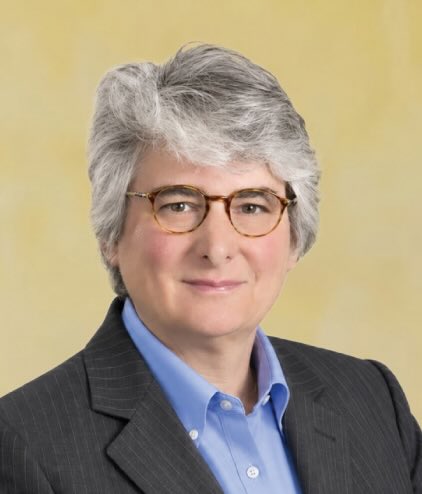 Debra R. Schoenberg
Owner & Founder
Debra R. Schoenberg
Owner & Founder








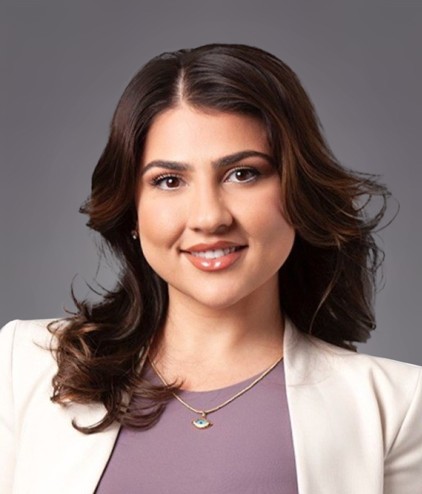 Kimia Kojouri
Associate
Kimia Kojouri
Associate