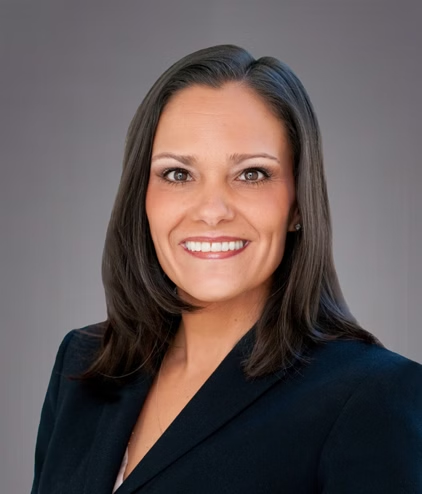
Voted #1 Family Law Firm in California
in a statewide poll limited to Judges, Attorneys, and Law Firm Administrators.
Request a Consultation


 Going through a divorce can be challenging, especially when there are children and property involved. If you need a skilled legal team to guide you through the process and protect your rights and assets, contact the Piedmont divorce attorney at Schoenberg Family Law Group, P.C.
At Schoenberg Family Law Group, P.C., we:
We handle various family law matters, from straightforward agreements to complex, high-value divorce cases. Contact us in Piedmont today to discuss your concerns about divorce and get answers to your questions.
Divorce involves more than just paperwork—it’s a complex process. Here at Schoenberg Family Law Group, P.C., our experienced divorce attorneys provide informed legal guidance, stand up for your rights, and ensure any prenuptial or postnuptial agreements with your spouse won’t jeopardize your future.
We also:
Our lead attorney, Debra R. Schoenberg, holds the title of Certified Family Law Specialist. She has undergone additional education and training and successfully passed a written examination focusing on family law, earning certification from the State Board of Legal Specialists as a specialist in this field. She was named a Fellow of the American Academy of Matrimonial Lawyers (AAML) and is a Board-Certified Family Law Trial Specialist by The National Board of Trial Advocacy (NBTA). Don’t navigate the divorce process alone; rely on a team of professionals to support you. Contact Schoenberg Family Law Group, P.C. today for dependable advice you can trust.
In California, divorces operate on a no-fault basis, meaning neither spouse is blamed for the divorce. Instead, a couple can end their marriage by citing irreconcilable differences or an inability to maintain harmony in their relationship.
In a divorce, the spouse who initiates the divorce process is called the petitioner, while the other spouse is the respondent. The divorce process begins when the petitioner files a Summons and Petition for Dissolution of Marriage with the court clerk. Additional forms are needed when children are involved.
The petitioner must officially notify the other spouse about the divorce proceedings. Typically, the divorce documents are delivered to the respondent by a neutral third party, like a professional process server or a peace officer. The court requires proof of proper service before proceeding with the divorce.
Once served, the respondent has thirty days to respond to the papers. During this time, they can voice their requests and address concerns about the petitioner’s proposals. Failing to respond could result in the court granting the divorce based on the petitioner’s terms.
In Piedmont, divorces generally fall into four categories: default, default with an agreement, uncontested, and contested divorce.
A default divorce occurs when the respondent doesn’t respond to the divorce papers, potentially allowing the court to grant the divorce by accepting the petitioner’s requests as stated in their initial petition.
In a default with an agreement scenario, the spouses reach an agreement before starting the divorce process. Because there’s an agreement, the respondent can respond to the petitioner’s petition without contesting any terms.
In an uncontested divorce, both spouses agree on all terms, and the respondent may file a response that doesn’t contest any items in the petition.
On the other hand, a contested divorce arises when the respondent files a response disagreeing with at least one of the terms presented in the petitioner’s divorce petition.
When it comes to resolving divorce conflicts in California, there are various options if spouses can’t reach an agreement:
Once final divorce orders are issued, they are legally binding and must be followed to avoid court penalties. In some cases, modifications can be requested by filing a petition with the court.
In California, when courts make decisions about child custody, they focus on the well-being of the children and the custodial parent’s ability to care for them. California recognizes two types of custody: legal and physical.
Legal custody involves making important decisions in the child’s life, such as healthcare, education, and religious upbringing. Physical custody refers to where the child primarily lives or spends their time.
When assessing child custody, courts take into account several factors, including:
It’s essential to understand that courts do not prefer one parent over the other based on gender, lifestyle, sexual orientation, or religious beliefs when determining custody.
If you’re going through a divorce, our team of Piedmont divorce attorneys is here to assist you. Reach out to us today to schedule a consultation. You can call our Piedmont office at 866.618.2132 or complete the online form below to schedule a consultation with our team today.
"I was seeking a reputable family law firm for my prenuptial agreement and received high praise for the Schoenberg Law Group. My attorney listened to my questions and responded to them very patiently. She also paid close attention all my concerns and made sure I was aware of the legal value of the agreement I was about to sign. It was…”
D.R.“It has been a real blessing to find this family law group in my life. I was in the middle of a custody battle with my ex wife and had a lawyer who had sided with my ex wife’s lawyer. I was faced with the option of paying to a regular lawyer to do half jobs with no results or to invest a bit more for a top family counselor who understood my situation and at the same time not giving me false hopes."
A.L."I hesitated filing papers for a long time because I was not sure if I could survive a long legal battle. When we were married, my husband worked while I raised the children, two under four years old, and I was afraid I would lose the stability they needed. I had a wonderful group of friends that helped me search for a reputable law firm that could represent me when my focus was on my children. They found the"
L.A.We are trial lawyers who litigate high-conflict, high-stakes cases. While we try to build on mediation efforts and exhaust opportunities for a negotiated agreement, emotions, egos and various other realities often force these disputes into court. It is critical to work with a firm that knows how to apply the law and the facts in your favor, whether in the courtroom or at the negotiating table.
One of California’s Top Family Lawyers for five consecutive years: 2022–2026

SFLG Voted #1 Family Law Firm in California for six consecutive years: 2021 - 2026

One of the Best Places to Work in the Bay Area by San Francisco Business Times

Debra Schoenberg was named a Fellow of the American Academy of Matrimonial Lawyers (AAML)
Designated as a Certified Family Law Specialist by the State of California Board of Legal Specialization

Board-Certified Family Law Trial Specialist by The National Board of Trial Advocacy (NBTA)
“My goal is to preserve your dignity and your humanity throughout what can be a very difficult and painful process, while at the same time achieving a favorable outcome on your behalf.”
Over 400 Years of Collective Family Law Experience
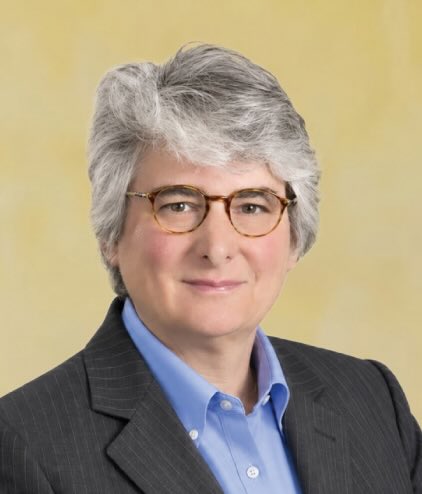 Debra R. Schoenberg
Owner & Founder
Debra R. Schoenberg
Owner & Founder






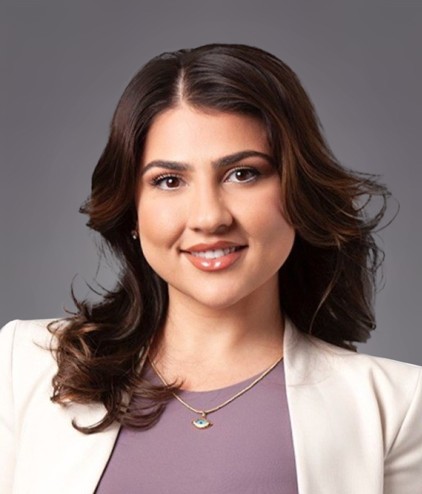 Kimia Kojouri
Associate
Kimia Kojouri
Associate