Voted #1 Family Law Firm in California
in a statewide poll limited to Judges, Attorneys, and Law Firm Administrators.
Request a Consultation

California imposes a mandatory six-month waiting period before any divorce becomes final, but the actual time needed to resolve the major issues in your divorce depends on many factors. What’s certain is that many decisions that shape your long-term financial footing and your family’s future happen in the early weeks of a case, frequently before either spouse has set foot in a courtroom. Working with experienced counsel from the start changes the range of outcomes available to you later.
Malibu’s economy is unlike anywhere else in the county. Entertainment industry compensation, music royalties, production company ownership, and equity in privately held businesses show up constantly in local divorce filings, alongside real estate holdings that can be worth more than most households’ entire net worth in other parts of the state. Schoenberg Family Law Group, P.C. represents clients throughout Malibu in matters that call for this level of financial sophistication paired with strong courtroom and negotiation skills. A case that begins amicably, and appears straightforward, can quickly turn complicated when a production company needs valuing, a beachfront property in Point Dume needs appraising, or support figures need to be calculated against income that varies wildly year to year. Our Malibu divorce attorneys advocate for clients at every stage of proceedings before the Los Angeles Superior Court, representing families throughout Malibu, Point Dume, the Malibu Colony, Serra Retreat, Malibu Canyon, and the surrounding Santa Monica Mountains communities.
California is both a community property and no-fault divorce state. These principles simplify some fundamental questions, but they don’t lower the stakes once children or significant assets enter the picture. Reach out to experienced counsel promptly if your case involves any of the following:
Our firm handles every issue that can arise during a dissolution, including:
Whether your case is relatively uncomplicated or layered with financial and logistical complexity, our team provides the steady guidance needed to move through the Los Angeles Superior Court system with confidence.
Litigation isn’t always the right path, even in cases involving high financial stakes. Many Malibu families choose mediation to keep control over the outcome while managing costs and reducing conflict.
For Malibu families in industries where public perception carries real weight — entertainment, music, hospitality, private business ownership — the discretion mediation provides can matter as much as the financial outcome itself. Our attorneys handle both negotiated settlements and courtroom litigation, and we help you determine which approach actually serves your interests.
California law offers three distinct paths for changing your marital status, and part of our job is helping you figure out which one actually fits your circumstances.
A divorce permanently ends a marriage. Once the court enters judgment and the mandatory six-month waiting period has elapsed, both spouses are legally single and free to remarry. As of January 1, 2026, California also allows couples who agree on every issue to file jointly under a new Joint Petition process established by SB 1427, which removes the need for formal service between spouses and can meaningfully cut down friction in an otherwise cooperative case.
Some spouses want to resolve financial and custody matters without formally ending the marriage, whether for religious reasons, to preserve access to health insurance, or for reasons that are entirely personal. Legal separation accomplishes this without the six-month waiting period required for divorce, and without the divorce residency requirement — only one spouse needs to live in California, with no minimum time attached.
Available in rare circumstances, an annulment treats a marriage as though it never legally existed. The standard is demanding: you must show the marriage was void or voidable due to incest, bigamy, fraud, force, or one party’s incapacity at the time of the ceremony.
California’s community property rule presumes that all assets and debts acquired between the date of marriage and the date of separation are owned equally by both spouses. Marital property is divided 50/50 upon divorce, unless a valid prenuptial or postnuptial agreement dictates otherwise. That includes income, real estate, retirement contributions, and debt accumulated during the marriage, regardless of whose name appears on the title or account. Separate property — assets owned before marriage, or received by gift or inheritance during the marriage — typically remains the property of the spouse who received it.
The challenge – and where experienced counsel is essential – is in properly characterizing and tracing assets, as the line between community and separate property easily becomes blurred. In Malibu, this issue surfaces often through royalty streams that began before a marriage but grew during it, production companies formed with a mix of premarital and marital funds, and homes purchased partly with inherited money, particularly in a market where a single property along Broad Beach or Point Dume can represent a significant share of a couple’s total net worth. We work to keep your separate property protected while making sure community assets are divided fairly.
Spousal support is often a heavily contested issue in a Malibu divorce, and cases involving entertainment or freelance income add another layer of difficulty. In making spousal support decisions, courts evaluate numerous factors set out in Family Code Section 4320, including:
The goal is to allow both spouses to maintain a lifestyle reasonably close to what they experienced during the marriage, while recognizing that two households cost more to run than one. We advocate for support arrangements that are fair and defensible, whether you’re seeking support or expected to pay it.
Few aspects of a divorce carry more weight than the decisions made about children. Malibu’s close-knit school community — including Malibu High and the local elementary schools, along with surfing programs, equestrian activities, and the kind of small-town familiarity you find along a stretch of coastline this size — means that custody arrangements often benefit from real specificity rather than a generic template.
Under California Family Code § 3011, every custody decision must prioritize the child’s health, safety, and welfare. In practice, judges assigned to Malibu-area cases tend to favor arrangements that:
Parents are encouraged to work together with their attorneys to draft a tailored parenting plan that meets their family’s unique needs. Once submitted to the court for approval and signed by the judge, it becomes a court order.
If the parents cannot agree on their own, they must attend mandatory mediation before the court will make custody decisions.
California courts recognize two types of custody: legal and physical. Legal custody grants decision-making authority over a child’s education, medical care, and general welfare. Physical custody determines where the child actually lives day-to-day, and how parenting time is divided.
Both types of custody can be awarded as joint (to both parents) or sole (to one parent). Except in unusual circumstances, the court favors some form of joint custody, aiming to preserve both parents’ ongoing relationship with the child. However, parenting time isn’t necessarily split equally.
At Schoenberg Family Law Group, we build careful, creative parenting plans around your real life, whether that means a standard rotation schedule, accommodations for a parent’s travel-heavy career, or provisions for an anticipated relocation.
California applies a statewide guideline formula for child support, but Family Code § 4057 allows courts to deviate from that formula where the resulting number would exceed the child’s reasonable needs. We work with financial professionals to build a thorough accounting of actual child-related expenses — including costs common among Malibu area families, such as private school tuition, equestrian or surf training, tutoring, and travel — so that support reflects reality instead of a formula applied without context.
Family law matters for Malibu residents are handled through the Superior Court of California, County of Los Angeles.
Family law cases require more than legal knowledge. They demand discretion, sound judgment, creative solutions, and an attorney who understands that the decisions made during this process will shape your life, and your children’s lives, for years afterward. Schoenberg Family Law Group has served families for nearly four decades. Our longevity reflects not just experience, but a consistent track record of protecting clients’ family structures and financial futures with precision and integrity.
At the center of our firm’s reputation is founding attorney Debra Schoenberg. As a Certified Family Law Specialist with nearly 40 years of dedicated practice, Debra has spent her career mastering the dynamics of high-stakes, high-asset matrimonial dissolutions. Her track record of untangling complex financial portfolios and managing high-conflict disputes allows our firm to approach every Malibu case with strategic precision. Under her leadership, our legal team provides the practical insight and sophisticated representation needed to navigate the local court system and the issues specific to this community.
Malibu clients who work with our team can expect:
We are committed to the highest standards of professionalism, integrity, results-driven representation, and thoughtful client service.
The veteran team at Schoenberg Family Law Group, P.C. brings nearly 400 combined years of family law practice to clients throughout Malibu and the surrounding Southern California region. We pair rigorous legal strategy with the compassion and discretion that complex personal matters demand. Contact our Malibu divorce lawyers at 866.618.2132 or complete our online form to discuss your situation and begin planning your next chapter.
"I was seeking a reputable family law firm for my prenuptial agreement and received high praise for the Schoenberg Law Group. My attorney listened to my questions and responded to them very patiently. She also paid close attention all my concerns and made sure I was aware of the legal value of the agreement I was about to sign. It was…”
D.R.“It has been a real blessing to find this family law group in my life. I was in the middle of a custody battle with my ex wife and had a lawyer who had sided with my ex wife’s lawyer. I was faced with the option of paying to a regular lawyer to do half jobs with no results or to invest a bit more for a top family counselor who understood my situation and at the same time not giving me false hopes."
A.L."I hesitated filing papers for a long time because I was not sure if I could survive a long legal battle. When we were married, my husband worked while I raised the children, two under four years old, and I was afraid I would lose the stability they needed. I had a wonderful group of friends that helped me search for a reputable law firm that could represent me when my focus was on my children. They found the"
L.A.We are trial lawyers who litigate high-conflict, high-stakes cases. While we try to build on mediation efforts and exhaust opportunities for a negotiated agreement, emotions, egos and various other realities often force these disputes into court. It is critical to work with a firm that knows how to apply the law and the facts in your favor, whether in the courtroom or at the negotiating table.
One of California’s Top Family Lawyers for five consecutive years: 2022–2026

SFLG Voted #1 Family Law Firm in California for six consecutive years: 2021 - 2026

One of the Best Places to Work in the Bay Area by San Francisco Business Times

Debra Schoenberg was named a Fellow of the American Academy of Matrimonial Lawyers (AAML)

Designated as a Certified Family Law Specialist by the State of California Board of Legal Specialization

Board-Certified Family Law Trial Specialist by The National Board of Trial Advocacy (NBTA)
“My goal is to preserve your dignity and your humanity throughout what can be a very difficult and painful process, while at the same time achieving a favorable outcome on your behalf.”
Over 400 Years of Collective Family Law Experience
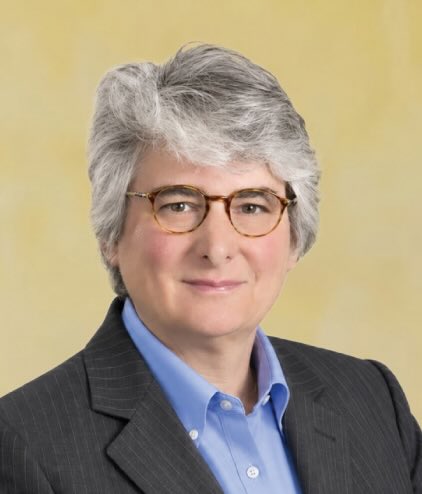 Debra R. Schoenberg
Owner & Founder
Debra R. Schoenberg
Owner & Founder







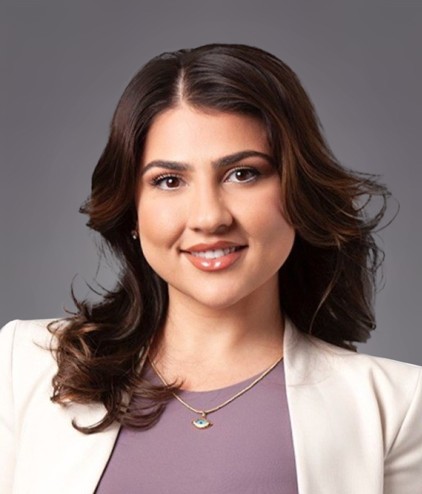 Kimia Kojouri
Associate
Kimia Kojouri
Associate



At least one spouse must have resided in California for six months and in Los Angeles County for at least three months before filing. If you've recently relocated to Malibu, your attorney can advise on whether filing here or in your previous county makes more sense.
The court applies the best interests of the child standard, weighing health, safety, stability, and each parent's willingness to support the child's relationship with the other. Parenting plans often account for school calendars, sports and equestrian schedules, and holiday rotations specific to the family. Parents who can work together to create a custom parenting plan, subject to court approval, keep far more control over their custody arrangements than those who leave it to a judge.
If the business was formed or grew substantially during the marriage, it likely carries a community property component. We work with business valuation experts, including those experienced with entertainment and production entities, to determine fair market value and identify appropriate outcomes, whether that's a buyout, a deferred payment structure, or continued co-ownership.
The date of separation marks the point at which one spouse communicates a clear, final intent to end the marriage and the couple begins living separate lives, whether in two homes or under one roof. Income earned and assets acquired after that date are treated as separate property, making this date a pivotal factor in how assets are divided.
Royalties, residuals, and backend participation are among the more complicated assets to divide because part may be community property while another part is separate, depending on when the underlying work was created, sold, or renewed. We use established legal frameworks and forensic experts to sort this out accurately.
Court filings are public record, but mediation and private judging both offer ways to keep sensitive financial and personal details out of public view. Many Malibu clients whose careers depend on public perception choose this route for exactly that reason.
The standard filing fee for a Petition for Dissolution of Marriage in Los Angeles County Superior Court is $435, though additional fees may apply depending on the motions and filings your case requires. The total cost of your divorce depends on many factors related to financial complexity, contentiousness of disputes, and how long it takes to resolve key issues.
California law imposes significant sanctions on a spouse who fails to fully disclose assets, up to and including awarding 100% of a hidden asset to the other party. We work with forensic accountants and use formal discovery tools to uncover concealed financial information.
Not always. Many Los Angeles County hearings can be conducted by remote video appearance, and cases resolved through mediation or a negotiated settlement may not require any courtroom appearance at all.
A valid prenuptial agreement can modify or override California's community property defaults. These agreements remain subject to challenge if they were signed under duress, without adequate disclosure, or without independent legal counsel for both parties.