Voted #1 Family Law Firm in California
in a statewide poll limited to Judges, Attorneys, and Law Firm Administrators.
Request a Consultation

Divorce in Manhattan Beach carries a particular set of stakes. It’s essential to have a skilled Manhattan Beach divorce attorney to guide you through the extremely consequential legal processes associated with ending a marriage: dividing property, establishing support, and resolving custody. Your lawyer also needs strategic local experience — familiarity with the Los Angeles County Superior Court’s Southwest District at the Torrance Courthouse and California’s community property laws that govern asset division. The state requires a minimum six-month waiting period before a divorce is finalized, but the decisions that shape your financial future and your family’s stability are made long before that. Having specialized legal counsel from the start can make all the difference as you move forward.
Manhattan Beach’s concentration of tech and aerospace executives, dual-income professional households, and high-value coastal real estate means that even cases that appear straightforward on the surface can become deeply complicated. Schoenberg Family Law Group, P.C. provides the focused, expert representation necessary to protect your interests at every stage of the process. The transition from a shared life to an independent one seldom unfolds seamlessly or on a clean timeline. What starts as a cooperative split can turn contentious when asset valuations, custody schedules, or support obligations come into dispute. Our Manhattan Beach divorce attorneys serve as both advocates and strategists, safeguarding your rights at every step through the Torrance Courthouse. We represent clients across the South Bay, including Hermosa Beach, Redondo Beach, El Segundo, Palos Verdes Estates, and Rancho Palos Verdes.
California is both a community property and no-fault divorce state. Although these frameworks aim to simplify key issues, the complexity of your case is largely determined by what’s at stake. Seek experienced legal counsel immediately if your dissolution involves any of the following:
Our firm is equipped to address every issue that arises during the dissolution process, including:
Whether your case is relatively straightforward or involves layers of financial complexity, our team provides the consistent, thorough guidance necessary to move through the Torrance Courthouse with confidence.
California law provides three primary legal avenues to change your marital status. We help you evaluate which path aligns with your personal and financial goals.
A divorce permanently ends the legal marriage. Once the court enters judgment and the mandatory six-month waiting period has elapsed, both parties are legally single and free to remarry.
Some individuals wish to resolve all financial and custody matters without formally ending the marriage — whether for religious reasons, to preserve access to a spouse’s health insurance, or because of personal circumstances. Legal separation accomplishes this without the six-month waiting period needed for a divorce to be finalized, as well as without the divorce residency requirement (only one spouse must live in California, and there’s no time rule).
An annulment treats the marriage as though it never legally occurred. The standard is strict: you must demonstrate the marriage was void or voidable due to incest, bigamy, fraud, force, or the incapacity of one party at the time of the ceremony.
Litigation is not always the right answer — even when the stakes are significant. Many Manhattan Beach families choose mediation to retain greater control over outcomes while keeping costs manageable and minimizing conflict.
For families in Manhattan Beach, where professional standing within a tight-knit beach community matters, the discretion that mediation affords can be just as valuable as any financial outcome. Our attorneys are experienced in both negotiated settlements and courtroom litigation — and we help you determine which path serves your interests best.
California’s community property rule means that all assets and debts acquired between the date of marriage and the date of separation are presumed to be equally owned by both spouses. Community property is the legal term for this shared marital estate — it includes income, real estate, retirement contributions, and debt accumulated during the marriage, regardless of whose name is on the account or title. Separate property — including assets owned before marriage, or received as a gift or inheritance during the marriage — typically remains the sole property of the receiving spouse.
The challenge, and the place where experienced legal counsel matters most, is in proper characterization and tracing of assets when the lines between community and separate property have blurred over time. In Manhattan Beach, this complexity frequently arises with employer equity grants that vest across years of marriage, businesses built with a combination of premarital and marital capital, and homes purchased partly with separate funds in a market where property values have appreciated substantially. We work to ensure your separate property remains protected and that community assets are divided fairly.
Spousal support is often one of the most disputed elements in a California divorce. Courts in the Southwest District apply the factors set out in Family Code Section 4320, which include:
The goal is to allow both spouses to maintain a lifestyle reasonably comparable to what they experienced during the marriage — while accounting for the practical reality that two separate households cost more than one shared one. We advocate for support structures that are fair and defensible, whether you are seeking support or expected to provide it.
Few aspects of a divorce carry more weight than decisions about your children. Manhattan Beach’s tight-knit community — with a highly regarded school district, competitive youth sports programs, and established neighborhood ties — means that custody arrangements often require a high level of detail, personalization, and local context.
Under California Family Code § 3011, all custody decisions must prioritize the child’s best interests — health, safety, and welfare. Practically speaking, judges in the Southwest District look for arrangements that:
California courts recognize two distinct forms of custody: legal and physical. Both types may be ordered as sole (awarded to one parent) or joint (shared between both parents). Legal custody governs decision-making authority over a child’s education, medical care, and general welfare. Joint legal custody is the norm in California, unless unusual circumstances make it unworkable. Physical custody determines where the child lives day-to-day and how parenting time is divided. Except in rare situations, judges favor significant time and an ongoing relationship with both parents. However, parenting time might not be split equally.
We develop parenting plans that reflect your actual lives — whether that involves standard rotation schedules, travel-friendly arrangements for parents with demanding careers, or provisions for upcoming relocations. Your child’s well-being is our first priority.
California uses a statewide guideline formula for child support, but Family Code § 4057 allows courts to deviate from that formula in cases where the resulting amount would exceed the child’s reasonable needs. We work with financial professionals to establish a thorough analysis of actual child-related expenses — from private school tuition and tutoring to extracurricular and travel costs — ensuring support is reasonable rather than arbitrary.
Family law proceedings for Manhattan Beach residents are handled through the Los Angeles County Superior Court’s Southwest District.
Family law cases demand more than legal knowledge. They require discretion, sound judgment, and an attorney who understands that the decisions made during this process will shape your life — and your children’s lives — for years to come. Schoenberg Family Law Group has served families for nearly four decades. Our longevity reflects not just experience, but a consistent track record of protecting clients’ financial futures with precision and integrity.
At the center of our firm’s long-standing reputation is founding attorney Debra Schoenberg. As a Certified Family Law Specialist with nearly 40 years of dedicated practice, Debra has spent her career mastering the complex dynamics of high-stakes, high-asset matrimonial dissolutions. Her extensive background in untangling intricate financial portfolios and managing high-conflict disputes allows our firm to approach every case with strategic precision. Under her leadership, our legal team provides the practical insight and sophisticated representation necessary to navigate the Torrance Courthouse and other South Bay court environments.
Manhattan Beach clients who work with our team can expect:
We are committed to the highest standards of professionalism, integrity, results-driven representation, and thoughtful client service.
The veteran team at Schoenberg Family Law Group, P.C. brings nearly 400 combined years of family law practice to clients throughout Manhattan Beach and the South Bay. We pair rigorous legal strategy with the compassion and discretion that complex personal matters demand. Contact our Manhattan Beach divorce lawyers at 866.618.2132 or complete our online form to discuss your situation and begin planning your next chapter.
"I was seeking a reputable family law firm for my prenuptial agreement and received high praise for the Schoenberg Law Group. My attorney listened to my questions and responded to them very patiently. She also paid close attention all my concerns and made sure I was aware of the legal value of the agreement I was about to sign. It was…”
D.R.“It has been a real blessing to find this family law group in my life. I was in the middle of a custody battle with my ex wife and had a lawyer who had sided with my ex wife’s lawyer. I was faced with the option of paying to a regular lawyer to do half jobs with no results or to invest a bit more for a top family counselor who understood my situation and at the same time not giving me false hopes."
A.L."I hesitated filing papers for a long time because I was not sure if I could survive a long legal battle. When we were married, my husband worked while I raised the children, two under four years old, and I was afraid I would lose the stability they needed. I had a wonderful group of friends that helped me search for a reputable law firm that could represent me when my focus was on my children. They found the"
L.A.We are trial lawyers who litigate high-conflict, high-stakes cases. While we try to build on mediation efforts and exhaust opportunities for a negotiated agreement, emotions, egos and various other realities often force these disputes into court. It is critical to work with a firm that knows how to apply the law and the facts in your favor, whether in the courtroom or at the negotiating table.
One of California’s Top Family Lawyers for five consecutive years: 2022–2026

SFLG Voted #1 Family Law Firm in California for six consecutive years: 2021 - 2026

One of the Best Places to Work in the Bay Area by San Francisco Business Times

Debra Schoenberg was named a Fellow of the American Academy of Matrimonial Lawyers (AAML)
Designated as a Certified Family Law Specialist by the State of California Board of Legal Specialization
Board-Certified Family Law Trial Specialist by The National Board of Trial Advocacy (NBTA)
“My goal is to preserve your dignity and your humanity throughout what can be a very difficult and painful process, while at the same time achieving a favorable outcome on your behalf.”
Over 400 Years of Collective Family Law Experience
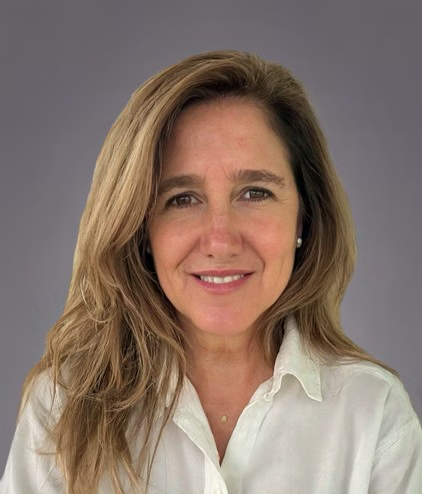
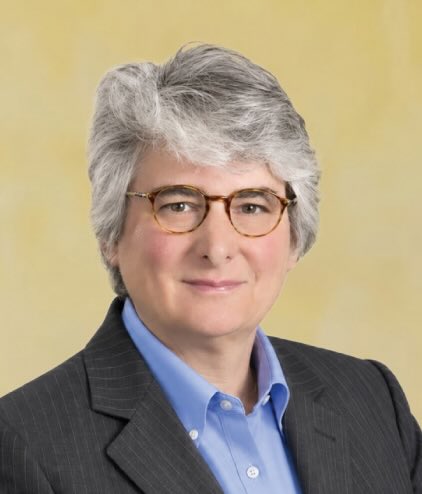 Debra R. Schoenberg
Owner & Founder
Debra R. Schoenberg
Owner & Founder






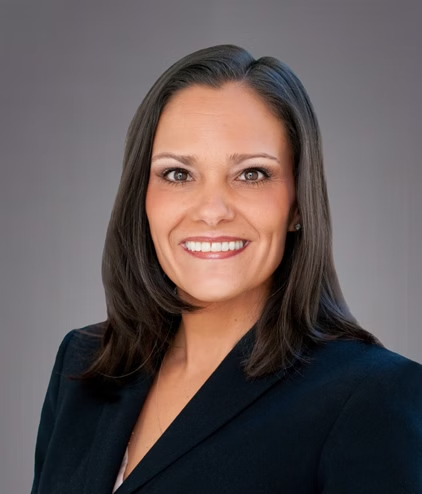
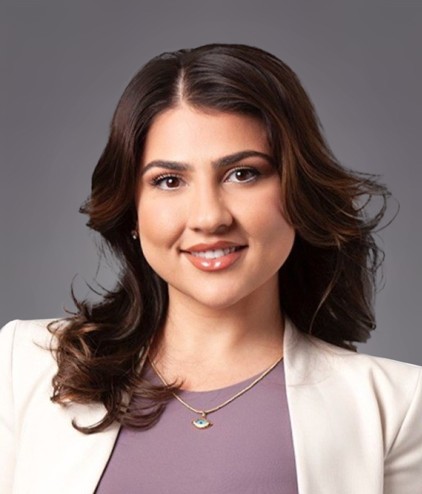 Kimia Kojouri
Associate
Kimia Kojouri
Associate



At least one spouse must have resided in California for six months and in Los Angeles County for at least three months prior to filing. If you recently relocated, your attorney can advise on whether filing here or in your prior county makes more sense.
Family law matters for Manhattan Beach residents are filed at the Los Angeles County Superior Court's Southwest District, the Torrance Courthouse, located at 825 Maple Avenue, Torrance, CA 90503.
If the business was formed or grew significantly during the marriage, it likely has a community property component. We work with business valuation experts to determine fair market value and identify appropriate outcomes — whether a buyout, deferred payment structure, or continued co-ownership.
The date of separation is the point at which one spouse communicates a clear, final intent to end the marriage and the couple begins living separate lives — whether in two homes or under the same roof. Income earned and assets acquired after this date are typically treated as separate property, making it a pivotal factor in asset division.
Stock options, RSUs, and deferred bonuses are among the most complex assets to divide because portions of a grant may be community property while others are separate, depending on when they were issued, earned, and when they vest. We use established legal frameworks and financial experts to untangle these accurately.
Court filings are generally public records, but mediation and private judging are both available options that can keep sensitive financial information and personal details out of the public record. Many Manhattan Beach clients choose this route to preserve privacy within a close community.
The standard filing fee for a Petition for Dissolution of Marriage is typically $435, though additional fees may apply depending on the motions and filings required throughout your case.
California law imposes significant sanctions on spouses who fail to fully disclose assets, up to and including awarding 100% of a hidden asset to the other party. We work with forensic accountants and use discovery tools to uncover concealed financial information.
Not always. Many hearings at the Torrance Courthouse can now be conducted via remote video appearance. Cases resolved through mediation or negotiated settlement may not require any courtroom appearances at all.
A valid prenuptial agreement can modify or override California's community property defaults. However, these agreements are subject to challenge if they were signed under duress, without adequate disclosure, or without independent legal counsel for both parties.