Voted #1 Family Law Firm in California
in a statewide poll limited to Judges, Attorneys, and Law Firm Administrators.
Request a Consultation


The experienced Marin County family law attorneys at The Schoenberg Family Law Group, P.C., understand the divorce process and can offer straightforward answers to your questions about divorce in Marin County. It is crucial to find the right legal team to represent you during this significant life change. We handle all divorce cases from any city in Marin County from San Rafael to Stinson Beach and more. Our Marin County divorce lawyer works with you to secure your family and financial assets for now and in the years to come. With over thirty-five years of experience handling complicated divorce and family law issues, we will protect your rights and act as vigorous advocates for your interests.
At The Schoenberg Family Law Group, we will explain your legal rights and help you identify your goals in the divorce process. Our attorneys offer help on all family law matters in divorce, including:
Contact our office today and allow us to demonstrate our commitment to exceptional client service.
Divorce is a legal end to a marriage or domestic partnership. In California, spouses divorce due to “irreconcilable differences.” The court places blame on neither spouse for the breakdown of the marriage.
California courts are interested in restructuring and settling matters about the following:

To divorce in California, one of the spouses must meet California’s residency requirements. One spouse needs to live:
It is possible to begin the process of ending your marriage without meeting the residency requirement by filing a petition for legal separation, then submitting an amended petition for divorce once the residency requirement is met.
There is an exception for same-sex couples who married in California but do not live in California and live in a state that does not recognize same-sex marriage. These couples can file a divorce in the California county where they married.
 Helpful and supportive
Debra and team were so helpful and supportive through the most difficult time in my life. Grateful to the team for their advice – would highly recommend their services to anyone needing a divorce attorney.
Couples married less than five years with no children, no real property, and limited marital assets and debts may qualify for a summary dissolution. This is an agreement filed at the court, along with a joint divorce petition and other required forms. It is simpler than the traditional divorce process.
Otherwise, the divorce process in California typically proceeds along the following path:
Filing Locally in Marin County: When you meet the statutory residency requirements, your divorce action will be processed through the Family Law Division of the Marin County Superior Court, housed in the historic Frank Lloyd Wright-designed Marin County Civic Center in San Rafael. All local motions, temporary support requests, and mandatory settlement conferences are held at this location. Because the Marin County bench operates under strict, specialized local court rules distinct from neighboring counties, having counsel deeply accustomed to the San Rafael family law judiciary is a vital advantage. The skilled team at Schoenberg Family Law Group has deep knowledge of the Marin County court system and decades of experience navigating family law matters here.
Most Marin County divorce cases settle without going to trial. Divorcing couples can reach a compromise amongst themselves, through their attorneys, or in an alternative setting like mediation. Divorce is adversarial by nature; therefore, many couples are unable to reach terms on their own.
Divorce attorneys are skilled negotiators and will work diligently at the beginning of a divorce case to reach an agreement. If they are unable to do so, attorneys will take their clients’ cases to court and fight for the best possible outcome.
When a divorce case is put before a judge, the judge decides any unresolved issues. This is risky. Therefore, where settlement is possible, it is best to do so.
Whether you have a contested or uncontested divorce will determine whether your divorce case has to go to trial in Marin County. Reaching a settlement with your ex-partner without going to trial is an uncontested divorce. In an uncontested divorce case, you and your ex agree on all the terms of the split. Neither contests the proposed terms of child custody, child support, alimony or property division.
If your ex does not contest the terms of your divorce from the beginning, you can proceed with a default divorce. A default divorce in California is an easy process in which the courts will grant your divorce petition as is, without the need for further negotiations with your ex-spouse or a trial. If your ex does wish to contest one or more terms, your case may require further negotiations – often through alternative dispute resolution – to settle.
A contested divorce is one in which you and your ex-spouse cannot compromise on the terms of the dissolution. You and your ex-spouse will have to go to trial in Marin County to resolve your case rather than working it out during alternative dispute resolution. A contested divorce takes more time and money to resolve than an uncontested divorce in California.
You can improve your chances of having a successful uncontested divorce case by working with an attorney. A lawyer from Schoenberg Family Law Group can advise you while you mediate with your former spouse. Your lawyer will work hard to come up with compromises that work for both of you. If you wish to save time, money and stress with an uncontested divorce in Marin, hire an attorney for assistance.
Mediation is an informal process to resolve divorce matters without conflict and the need for litigation. The goal is a compromised solution.
Benefits to divorce mediation may include:
California requires mediation in all child custody disputes before the court makes a child custody ruling. The mediation must be with a court-appointed counselor trained in these issues. The parents’ divorce case may go through traditional litigation or continue through mediation alongside their custody issues.
A frequently asked question we receive at Schoenberg Family Law Group is, “How much will my divorce cost?” In California, you have to pay a $435 filing fee for your divorce petition. You may qualify for a fee waiver if you can prove you are a low-income individual. This is just the fee for filing the paperwork, however. You will face more expenses before your divorce is final, such as court costs and attorney’s fees. Several factors could impact the price tag on your divorce case.
At The Schoenberg Family Law Group, P.C., we pursue equitable and fair divorce judgments for our clients. Our attorneys will answer your most pressing questions involving divorce or legal separation proceedings. Allow us to relieve you of the legal burdens of a divorce so you can focus on moving forward with your life.
Today’s decisions will affect your future. Our attorneys will work with you individually to understand your needs and create a divorce plan tailored for you. Regardless of your needs, we can help you. Contact our Marin County Family Lawyers or call to schedule a consultation.
"I was seeking a reputable family law firm for my prenuptial agreement and received high praise for the Schoenberg Law Group. My attorney listened to my questions and responded to them very patiently. She also paid close attention all my concerns and made sure I was aware of the legal value of the agreement I was about to sign. It was…”
D.R.“It has been a real blessing to find this family law group in my life. I was in the middle of a custody battle with my ex wife and had a lawyer who had sided with my ex wife’s lawyer. I was faced with the option of paying to a regular lawyer to do half jobs with no results or to invest a bit more for a top family counselor who understood my situation and at the same time not giving me false hopes."
A.L."I hesitated filing papers for a long time because I was not sure if I could survive a long legal battle. When we were married, my husband worked while I raised the children, two under four years old, and I was afraid I would lose the stability they needed. I had a wonderful group of friends that helped me search for a reputable law firm that could represent me when my focus was on my children. They found the"
L.A.We are trial lawyers who litigate high-conflict, high-stakes cases. While we try to build on mediation efforts and exhaust opportunities for a negotiated agreement, emotions, egos and various other realities often force these disputes into court. It is critical to work with a firm that knows how to apply the law and the facts in your favor, whether in the courtroom or at the negotiating table.

One of California’s Top Family Lawyers for five consecutive years: 2022–2026

SFLG Voted #1 Family Law Firm in California for six consecutive years: 2021 - 2026

One of the Best Places to Work in the Bay Area by San Francisco Business Times

Debra Schoenberg was named a Fellow of the American Academy of Matrimonial Lawyers (AAML)

Designated as a Certified Family Law Specialist by the State of California Board of Legal Specialization

Board-Certified Family Law Trial Specialist by The National Board of Trial Advocacy (NBTA)
“My goal is to preserve your dignity and your humanity throughout what can be a very difficult and painful process, while at the same time achieving a favorable outcome on your behalf.”
Over 400 Years of Collective Family Law Experience
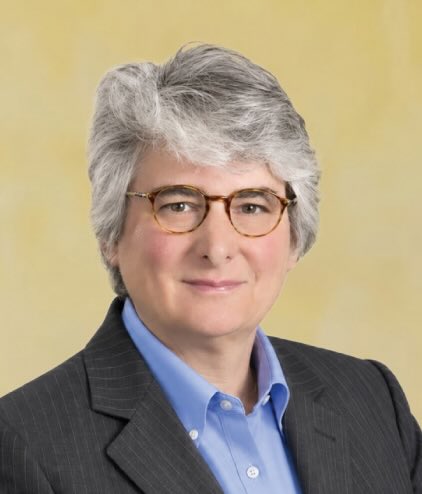 Debra R. Schoenberg
Owner & Founder
Debra R. Schoenberg
Owner & Founder









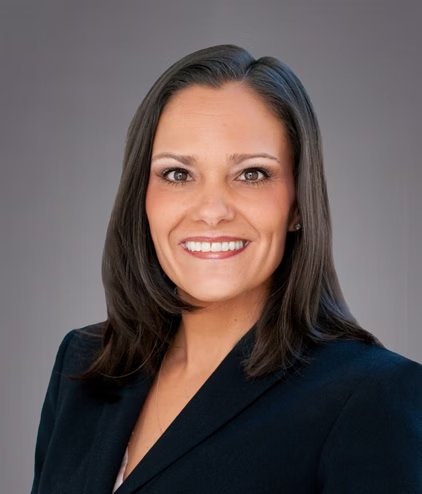
 Kimia Kojouri
Associate
Kimia Kojouri
Associate





A divorce in Marin County takes at least six months from the date your spouse is served. Complex cases with business interests or disputes may take longer. Mediation can help streamline the process.
Community property is divided equally. This generally includes all assets acquired during the marriage — homes, assets, and retirement savings. The court ensures both spouses receive an equal share if assets must be sold. The court may consider certain assets separate property if they were gifts, inheritances, or owned prior to the marriage.
The division of a family trust depends heavily on whether the trust is revocable or irrevocable, and whether it was funded with community property or separate property. Irrevocable trusts established with inheritance or pre-marital wealth are protected as separate property. However, if marital income or community assets were transferred into a revocable trust during the marriage, those specific funds are subject to tracing and an equal 50/50 division under California community property laws.
A Moore-Marsden calculation is a legal formula used when one spouse purchased the family home before the marriage (separate property), but the couple used community earnings during the marriage to pay down the mortgage or make improvements. This formula determines the exact percentage of equity the community estate has acquired in that property, ensuring the non-owner spouse receives their fair 50% share of the community’s financial contribution upon divorce.
Possibly, depending on your marriage length, income, and need. Temporary support can be awarded during proceedings, with long-term support decided at judgment. Courts emphasize fairness and self-sufficiency.
Not always. Many cases resolve through mediation or written agreements. Only contested matters require formal hearings.
Yes, Marin County is a "recommending county" for child custody disputes. If parents are unable to reach a voluntary parenting plan during their mandatory session with Family Court Services (FCS) in San Rafael, the court-appointed mediator will draft a formal, written recommendation. This recommendation outlines specific legal and physical custody arrangements and is submitted directly to the family law judge, carrying substantial weight in the final judicial ruling.
To calculate accurate child and spousal support involving corporate executives, Marin County courts frequently look past base salaries to examine comprehensive compensation packages. This includes deferred compensation, performance bonuses, stock options, and Restricted Stock Units (RSUs). Judges regularly implement a "Smith-Ostler" order, which commands the higher-earning spouse to pay a fixed percentage of any fluctuating, variable income over their base salary as it is paid out.
A prenuptial agreement can be set aside or declared legally unenforceable by a Marin County judge if the challenging spouse can prove specific statutory defects. Common legal grounds for invalidation include showing that the agreement was signed under duress or coercion, a lack of complete and transparent financial asset disclosure by one party, or a violation of California’s strict mandatory seven-day review window prior to execution.
If you used separate property inheritance to buy or down-pay a marital asset, California Family Code Section 2640 gives you a statutory right to reimbursement. Provided you can produce a clear financial paper trail tracing the separate funds directly into the asset, you will be reimbursed for your original contribution (principal, down payment, or improvements) without interest or appreciation before the remaining equity is split 50/50.
You can request a default judgment after 30 days. The court may grant the terms of your petition without their input.