Voted #1 Family Law Firm in California
in a statewide poll limited to Judges, Attorneys, and Law Firm Administrators.
Request a Consultation

Newport Beach wealth tends to come from a narrower set of sources than in most Southern California cities: private equity and hedge fund work, wealth management, medicine, and biotech leadership concentrated around the Fashion Island and John Wayne Airport business corridor. Schoenberg Family Law Group, P.C. has represented clients across this community in cases where the ordinary rules of asset division run into extraordinary complexity — carried interest that hasn’t fully vested, a fund stake that’s difficult to price, a Balboa Island property purchased with a mix of inherited and marital money. Our attorneys appear before the Orange County Superior Court on behalf of families throughout Newport Beach, Corona del Mar, Balboa Island, and Newport Coast, and we build each case around the specific financial picture in front of us rather than a standard playbook.
California divorces proceed under no-fault and community property rules. While these frameworks are straightforward in principle, in practice, issues can quickly become contentious when complex assets and real families are involved. Decisions that will shape your family’s future and financial stability are made months before your divorce becomes final. Working with a skilled family law attorney from the outset can make a significant difference in your process and outcomes.
Talk to a lawyer right away if your case involves:
We take on the full range of issues that surface in a dissolution:
Complex or straightforward, every case gets the same level of preparation as it moves through the Orange County Superior Court.
Not every couple needs the same legal path. California recognizes three distinct routes for changing marital status.
This is the permanent end of a marriage. After your final judgment and the mandatory six-month waiting period, both spouses are free to remarry. Since January 1, 2026, SB 1427 has allowed couples in full agreement to file a Joint Petition together, skipping formal service and reducing the procedural friction that often complicates otherwise cooperative splits.
Couples who want financial and custody matters resolved without ending the marriage — for religious reasons, insurance coverage, or simply personal preference — can pursue legal separation. It skips the six-month wait entirely and has no minimum residency requirement beyond one spouse currently living in California.
Rare and narrowly available. An annulment treats the marriage as if it never legally existed, but only where grounds like fraud, bigamy, incest, force, or incapacity at the time of the ceremony can be shown.
Courtrooms aren’t the only path forward, even for cases involving significant wealth. A meaningful share of Newport Beach families resolve their divorce through mediation instead.
While we aim to resolve cases as amicably as possible, sometimes a trial is unavoidable. Our attorneys are skilled negotiators – and aggressive litigators when a case calls for it. We navigate every case according to the actual dispute in front of us.
Under California’s community property rule, everything acquired between marriage and separation belongs equally to both spouses — income, real estate, retirement contributions, and debt alike, regardless of whose name is attached. Property owned before the marriage, or received individually as a gift or inheritance, typically stays with the spouse who owns it.
Over time, the lines between separate and marital property can become blurry – assets get mixed (commingled), and thorough tracing becomes both difficult and essential. A fund position that began before the wedding but grew substantially during the marriage. A firm capitalized with a mix of premarital savings and community income. A Newport Coast property bought partly with an inheritance and partly with joint funds. These are situations where a rough division isn’t enough — assets must be carefully traced and characterized, and numbers reconstructed in detail to achieve a fair and accurate division.
Support disputes get complicated when the paying spouse’s income doesn’t arrive in simple, steady paychecks. California courts weigh a set of factors under Family Code Section 4320 in every case:
Courts aim to enable both spouses to maintain a lifestyle similar to their married standard of living, understanding that two households cost more than one. We push for numbers that hold up to scrutiny, whichever side of the request our client is on
Decisions that affect your children’s well-being, and your ongoing relationship with them, are the most important you will make in your divorce. Newport Beach families often build their lives around specific local anchors — Corona del Mar High School, sailing programs, a private school like Sage Hill. California courts encourage parents to work together to devise a parenting plan that works for their family’s real life (subject to court approval).
California Family Code § 3011 requires every custody ruling to center on the child’s health, safety, and welfare. Judges hearing Newport Beach cases typically look for arrangements that:
Custom parenting plans built jointly by both parents, once approved by the court, carry the same force as any other order. When parents can’t agree, mediation is required before a judge makes final custody decisions. Parents who can cooperate and focus on their child’s needs maintain much greater control over outcomes.
Legal custody covers decision-making authority — school choices, medical care, general welfare. Physical custody determines where the child actually lives and how parenting time is divided. Either can be sole (awarded to one parent) or joint (shared by both parents). Joint physical custody doesn’t require an even split of time; it just means both parents remain meaningfully involved.
We draft parenting plans that reflect real schedules, including the demanding travel patterns common among Newport Beach’s finance and executive clients.
The statewide guideline formula doesn’t always fit a high-income household well. Family Code § 4057 lets courts depart from the formula when it would produce a number out of sync with the child’s actual needs. We build out the real cost picture — private school, competitive sailing or club sports, tutoring, travel — so support orders reflect the family’s real life rather than a generic calculation.
Legal knowledge alone doesn’t get a family law case right. It takes judgment, discretion, sensitivity, awareness of local factors, and a genuine understanding that today’s decisions impact your family for years to come. Nearly four decades in, Schoenberg Family Law Group has built its reputation on exactly that combination.
Founding attorney Debra Schoenberg, a Certified Family Law Specialist with close to 40 years of experience, has spent her career on the kind of high-stakes, high-asset cases that define Newport Beach practice. Her experience untangling complicated financial structures and steering high-conflict disputes toward resolution shapes how our entire team approaches a case from day one.
Clients working with us can expect:
Over 400 combined years of family law experience back our Newport Beach team. We bring skill, precision, discretion, and compassion to the most consequential decisions of our clients’ lives. Call 866.618.2132 or fill out our online form to talk through your situation.
"I was seeking a reputable family law firm for my prenuptial agreement and received high praise for the Schoenberg Law Group. My attorney listened to my questions and responded to them very patiently. She also paid close attention all my concerns and made sure I was aware of the legal value of the agreement I was about to sign. It was…”
D.R.“It has been a real blessing to find this family law group in my life. I was in the middle of a custody battle with my ex wife and had a lawyer who had sided with my ex wife’s lawyer. I was faced with the option of paying to a regular lawyer to do half jobs with no results or to invest a bit more for a top family counselor who understood my situation and at the same time not giving me false hopes."
A.L."I hesitated filing papers for a long time because I was not sure if I could survive a long legal battle. When we were married, my husband worked while I raised the children, two under four years old, and I was afraid I would lose the stability they needed. I had a wonderful group of friends that helped me search for a reputable law firm that could represent me when my focus was on my children. They found the"
L.A.We are trial lawyers who litigate high-conflict, high-stakes cases. While we try to build on mediation efforts and exhaust opportunities for a negotiated agreement, emotions, egos and various other realities often force these disputes into court. It is critical to work with a firm that knows how to apply the law and the facts in your favor, whether in the courtroom or at the negotiating table.

One of California’s Top Family Lawyers for five consecutive years: 2022–2026

SFLG Voted #1 Family Law Firm in California for six consecutive years: 2021 - 2026

One of the Best Places to Work in the Bay Area by San Francisco Business Times

Debra Schoenberg was named a Fellow of the American Academy of Matrimonial Lawyers (AAML)

Designated as a Certified Family Law Specialist by the State of California Board of Legal Specialization

Board-Certified Family Law Trial Specialist by The National Board of Trial Advocacy (NBTA)
“My goal is to preserve your dignity and your humanity throughout what can be a very difficult and painful process, while at the same time achieving a favorable outcome on your behalf.”
Over 400 Years of Collective Family Law Experience
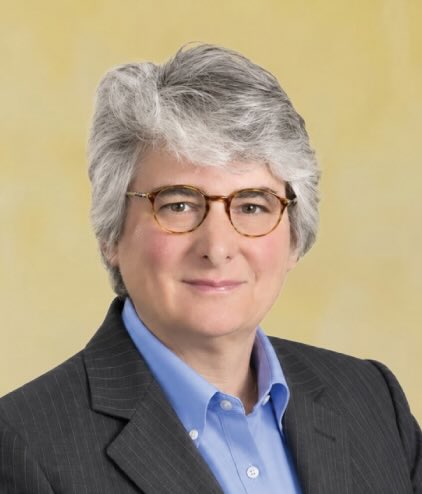 Debra R. Schoenberg
Owner & Founder



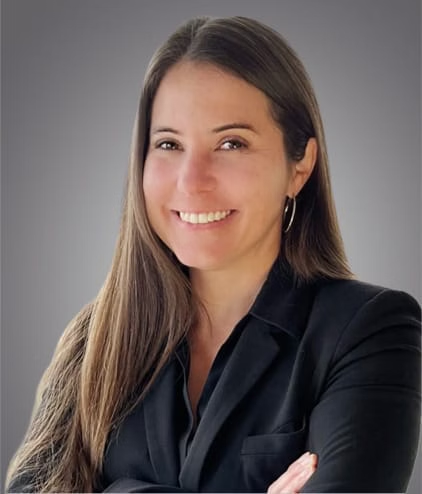




 Kimia Kojouri
Associate






Six months in California and three months in Orange County for at least one spouse. Recently relocated to Newport Beach? Your attorney can advise on whether filing locally makes sense or whether your prior county is the better option.
California courts must prioritize the child’s best interests. Judges weigh health, safety, stability, and each parent's willingness to support the child's bond with the other parent, then layer in the specifics — school schedules, sailing or sports commitments, holiday traditions. Parents who negotiate their own plan and bring it to the court for approval tend to end up with more workable arrangements than those who leave it to a judge.
Growth that occurred during the marriage typically carries a community property share. Our team works with valuation experts to establish real market value and figure out whether a buyout, structured payout, or continued co-ownership makes the most sense.
It marks when one spouse demonstrated a clear, unmistakable intent to end the marriage and the couple began living apart in practice, even if still under one roof. Everything earned or acquired after that date is treated as separate property — which makes pinpointing the date financially significant.
These are notoriously hard to divide cleanly because portions can be community property and portions separate, depending entirely on the timing of when the interest was earned versus when it actually vests or pays out. Forensic financial experts are essential here.
Court filings themselves are public record, but mediation and private judging both keep the substance confidential. Many of our Newport Beach clients in finance or healthcare leadership choose this route specifically to protect their professional reputation.
$435 for the initial Petition for Dissolution, with additional fees depending on what motions the case requires along the way.
California law penalizes concealment harshly — a court can award the entire hidden asset to the other spouse. We use forensic accountants and formal discovery tools to bring hidden assets into the open.
Not necessarily. Many Orange County hearings allow remote video appearances, and settled or mediated cases may require no courtroom time at all.
A properly executed prenuptial agreement can override the default community property rules, though it remains open to challenge if it was signed under pressure, without full disclosure, or without each spouse having independent counsel.