Voted #1 Family Law Firm in California
in a statewide poll limited to Judges, Attorneys, and Law Firm Administrators.
Request a Consultation
A prenuptial agreement is one of the most practical steps a couple can take before getting married — not because they expect the marriage to fail, but because they value honesty, planning, and each other’s financial security. At Schoenberg Family Law Group, P.C., our Palo Alto prenuptial agreement attorneys help couples enter marriage with clarity and confidence, building agreements that are legally sound, personally fair, and built to hold up in court.
California’s community property laws are strict. Without a prenup, virtually everything acquired during the marriage — income, assets, equity, and debt — is divided 50/50 in a divorce, regardless of circumstances. A well-drafted prenup lets you and your spouse define your own terms while you are still aligned and free from the pressures of a dissolving marriage. It is important to understand from the outset that a prenup is primarily a financial planning tool — it cannot govern child custody, child support, or personal conduct, and any provisions that attempt to do so will not be enforced by a California court.
For couples in Palo Alto and Silicon Valley, standard templates are rarely sufficient. Tech equity, RSUs, founder’s equity, and intellectual property all require specialized drafting that generic agreements simply do not address. California’s Uniform Premarital Agreement Act also imposes specific requirements — including a mandatory seven-day review period and independent legal counsel for each spouse — that must be met for the agreement to hold up. We design every prenuptial agreement with potential litigation in mind, because the true measure of any marital agreement is whether it survives a challenge in court.
If you are considering a prenuptial agreement in Palo Alto or anywhere in Santa Clara County, contact our firm today to schedule a consultation. Debra R. Schoenberg is a Certified Family Law Specialist with nearly four decades of experience crafting marital agreements that protect complex Silicon Valley wealth.
A prenuptial agreement — commonly called a prenup — is a contract two parties enter into before they marry. It defines the financial arrangements that will govern a divorce, should the marriage ever end. Rather than leaving property division to California’s default community property rules, a prenup allows both spouses to agree on terms in advance, at a time when they are still on the same side of the table.
The agreement goes into effect automatically the moment the couple marries. From that point forward, the terms of the prenup — not California’s default laws — control how the couple’s specified assets, debts, and income will be treated in a dissolution.
Prenups are not just for the wealthy. Any couple with separate property, a prior business, inheritance expectations, children from a previous relationship, or simply a desire to protect their individual financial futures can benefit from a prenuptial agreement in California.
California is a community property state. That means that unless a valid agreement says otherwise, any asset either spouse earns or acquires from the date of marriage until separation is considered jointly owned — and divided equally in divorce. That includes salaries, real estate, investment accounts, retirement contributions, and business interests.
For many couples, especially those in Silicon Valley’s high-stakes financial environment, a 50/50 default is neither fair nor practical. A prenup allows couples to:
The goal is not to plan for divorce — it is to plan around uncertainty, the same way anyone buys insurance for a risk they hope never materializes.
Standard prenuptial agreement templates are not designed for the financial realities of Palo Alto and Silicon Valley. Tech executives, startup founders, venture capital investors, and early-stage employees often hold complex, illiquid, or contingent assets that require sophisticated legal treatment.
Our firm specifically addresses these asset types in every prenuptial agreement we draft:
RSUs and stock options vest over time, often on multi-year schedules that begin before marriage and continue well into it. Without careful drafting, the portion that vests during marriage becomes community property — subject to an equal split. We structure agreements that trace the separate property origin of these grants and define precisely how vesting during marriage will be treated.
A business you founded before marriage may appreciate dramatically after the wedding. Under California law, that appreciation can become a community property asset if it is attributable to either spouse’s labor or contribution during the marriage. A prenuptial agreement can define how the business’s value will be measured and what portion, if any, will remain entirely separate.
If you develop software, patents, creative works, or other intellectual property during the marriage — even if the idea predates it — California may classify some or all of it as community property. We draft precise intellectual property provisions that protect pre-existing work and address how new developments tied to pre-marital projects will be handled.
Without a customized, tightly drafted agreement, these high-value assets are vulnerable to commingling and the 50/50 community property split dictated by California default law.

The seven-day rule deserves emphasis — it is mandatory. Under the Uniform Premarital Agreement Act, an agreement signed without giving the other party at least seven days to review and seek counsel is presumptively unenforceable. Couples who wait until the week before the wedding to address their prenup frequently end up with an agreement a court will not honor.
Our attorneys begin the prenuptial agreement process well in advance of your wedding date — ensuring that both parties have adequate time, full disclosure, and independent representation.
Even a perfectly executed prenup will be partially or entirely unenforceable if it contains prohibited terms. California courts will not honor any prenup provision that:
Most valid prenuptial agreements focus on property classification, debt allocation, asset protection, and spousal support. These are the areas where California law gives couples the most flexibility — and where the financial stakes are highest.
If a prenup contains unenforceable provisions, a court may strike only those terms, or it may declare the entire agreement void depending on how central those provisions are to the contract. Proper drafting prevents this problem entirely.
Our lead attorney, Debra R. Schoenberg, holds the Certified Family Law Specialist designation — an elite credential requiring advanced training, rigorous testing, and peer recognition in California family law. Not every attorney who drafts a prenup holds this distinction. When your financial future is on the line, it matters.
We have spent decades advising Palo Alto clients on the unique challenges of protecting tech equity, founder interests, and intellectual property in marital agreements. Our drafting is precise, our provisions are specific, and our agreements do not rely on templates that fail when tested.
The best prenuptial agreement is one that never has to be litigated. The second-best is one that wins. As experienced trial attorneys, we draft every agreement with enforcement in mind — anticipating the arguments a challenging spouse might raise and closing those gaps before the document is signed.
Schoenberg Family Law Group has served families for nearly four decades. Our longevity reflects not just experience, but a consistent track record of protecting clients’ financial futures with precision and integrity.
Our firm is consistently recognized by Super Lawyers, U.S. News & World Report Best Law Firms, and the American Institute of Family Law Attorneys — among the most rigorous standards of peer evaluation in the legal industry.
At Schoenberg Family Law Group, P.C., we know a prenuptial or postnuptial agreement is a personal matter between you and your spouse. However, we also recognize the immense importance of bringing your agreement to an attorney before finalizing anything. A prenup or postnup has the power to control your financial future in the event of a divorce. Do not treat it lightly.
Speak to our attorneys in Palo Alto, California about a prenuptial or postnuptial agreement for more information before signing anything. We will explain California’s related laws and help you create a legally binding contract that fully protects your rights. Request your consultation online or by calling (866) 963-8623 today.
"I was seeking a reputable family law firm for my prenuptial agreement and received high praise for the Schoenberg Law Group. My attorney listened to my questions and responded to them very patiently. She also paid close attention all my concerns and made sure I was aware of the legal value of the agreement I was about to sign. It was…”
D.R.“It has been a real blessing to find this family law group in my life. I was in the middle of a custody battle with my ex wife and had a lawyer who had sided with my ex wife’s lawyer. I was faced with the option of paying to a regular lawyer to do half jobs with no results or to invest a bit more for a top family counselor who understood my situation and at the same time not giving me false hopes."
A.L."I hesitated filing papers for a long time because I was not sure if I could survive a long legal battle. When we were married, my husband worked while I raised the children, two under four years old, and I was afraid I would lose the stability they needed. I had a wonderful group of friends that helped me search for a reputable law firm that could represent me when my focus was on my children. They found the"
L.A.We are trial lawyers who litigate high-conflict, high-stakes cases. While we try to build on mediation efforts and exhaust opportunities for a negotiated agreement, emotions, egos and various other realities often force these disputes into court. It is critical to work with a firm that knows how to apply the law and the facts in your favor, whether in the courtroom or at the negotiating table.
One of California’s Top Family Lawyers for five consecutive years: 2022–2026

SFLG Voted #1 Family Law Firm in California for six consecutive years: 2021 - 2026

One of the Best Places to Work in the Bay Area by San Francisco Business Times

Debra Schoenberg was named a Fellow of the American Academy of Matrimonial Lawyers (AAML)
Designated as a Certified Family Law Specialist by the State of California Board of Legal Specialization
Board-Certified Family Law Trial Specialist by The National Board of Trial Advocacy (NBTA)
“My goal is to preserve your dignity and your humanity throughout what can be a very difficult and painful process, while at the same time achieving a favorable outcome on your behalf.”
Over 400 Years of Collective Family Law Experience
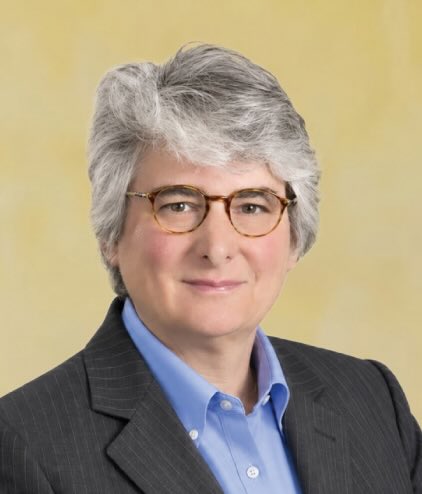 Debra R. Schoenberg
Owner & Founder
Debra R. Schoenberg
Owner & Founder







 Kimia Kojouri
Associate
Kimia Kojouri
Associate




A prenuptial agreement is a legally binding contract two people sign before marriage to define how their finances, property, and assets will be handled if the marriage ends in divorce. In California, prenups are governed by the Uniform Premarital Agreement Act and must meet specific requirements to be enforceable. Once the couple marries, the prenup goes into effect automatically.
Yes. A prenuptial agreement is one of the most effective tools for protecting pre-marital business interests, founder's equity, and future appreciation from California's community property rules. Without one, the portion of your business's growth attributable to marital labor can become a jointly owned asset. Careful drafting defines the business as separate property and specifies how any appreciation will be treated.
Independent legal counsel for both spouses is strongly recommended and, in some circumstances, legally required. Under California law, if a prenuptial agreement waives spousal support, the party waiving that right must be represented by an independent attorney at the time of signing — otherwise the waiver is unenforceable. For all other provisions, a party may waive independent counsel in writing, but doing so significantly increases the risk that the agreement will not hold up in court.
Under the California Uniform Premarital Agreement Act, the signing party must have at least seven calendar days between receiving the final draft of the prenuptial agreement and the date they sign it. This mandatory period is designed to prevent coercion and ensure both parties have adequate time to seek legal advice. An agreement that does not comply with this rule is presumptively unenforceable.
Yes, and it should. Restricted Stock Units and stock options that vest during a marriage are treated as community property in California unless a valid agreement says otherwise. A properly drafted prenuptial agreement will address the grant date, vesting schedule, and how unvested shares should be classified — protecting the portion that stems from your pre-marital employment while complying with California's property rules.
No. California courts will not enforce any prenuptial agreement provision that attempts to predetermine child custody, visitation, or child support. Those decisions are made by the court at the time of divorce based on the best interests of the child — no contract can override that standard.
Common grounds for invalidating a California prenup include lack of voluntary execution, failure to provide full financial disclosure, missing independent legal counsel where required, unconscionable or one-sided terms, and failure to comply with the seven-day review requirement. Courts may void only specific provisions or strike the entire agreement depending on how fundamental the problem is.
Most family law attorneys recommend beginning the prenuptial agreement process at least 60 to 90 days before the wedding. This allows time for financial disclosures, drafting, negotiation, independent review by both attorneys, and the mandatory seven-day waiting period — all without creating time pressure that could compromise the agreement's validity.
Yes. A prenuptial agreement can define, limit, or waive spousal support obligations, provided the terms are not unconscionable and both parties had the opportunity to consult independent counsel. If the agreement eliminates spousal support for a party who later requires public assistance, however, a court has the discretion to modify that provision.
Nothing. A prenuptial agreement has no effect on a marriage that does not end in divorce or legal separation. The agreement sits dormant unless and until it is triggered by dissolution proceedings. Many couples find that simply having the agreement in place provides peace of mind throughout the marriage — regardless of whether it is ever needed.