Voted #1 Family Law Firm in California
in a statewide poll limited to Judges, Attorneys, and Law Firm Administrators.
Request a Consultation

In California, one of the financial matters that you may encounter during a divorce or legal separation is alimony. Known as spousal support in California, this is an amount that one spouse must pay the other to maintain the recipient’s standard of living. Though you may wish to have a clean break from your ex-spouse, you may have no choice but to stay connected through a spousal support order. Our expert Palo Alto alimony lawyer is here to assist you every step of the way.
Spousal support is a complicated subject within the field of family law. Navigating alimony requires in-depth knowledge of California’s related laws. Whether you are the spouse seeking alimony or the spouse facing this request, an experienced Palo Alto alimony lawyer can help you understand your rights and negotiate for the best outcome.
At the Schoenberg Family Law Group, P.C., we urge clients who are going through divorce and legal separation cases in Palo Alto to protect their legal rights when it comes to spousal support. Ensure a spousal support agreement is fair and equitable by speaking to an attorney. Contact us today to request a consultation.

While it is not legally required to hire a lawyer to represent you during a divorce or legal separation case in California, doing so can significantly help. Your lawyer will understand California’s alimony laws and how to successfully navigate them for the best odds of obtaining the financial support that you need from your ex in your new life. Your lawyer can help you request alimony, support your request with financial documents and other evidence, and understand what to expect during your case.
If you are the higher-earning spouse in your relationship and are wondering if you will be required to pay alimony to your ex after a divorce or legal separation, a lawyer can answer this question for you, as well. Your lawyer can estimate how much in spousal support you may be obligated to pay your spouse, if any, so that you can make more informed decisions moving forward. Your lawyer will have the answers and solutions that you need from either side of the case.
Spousal Support is a financial award that may be given to one spouse in a divorce or legal separation case to maintain his or her standard of living after the split. When two people have an income disparity during a divorce in California, the lower-earning spouse may be eligible for temporary or permanent spousal support from the higher-earning spouse. This type of award is especially common if one spouse gave up a career or education to raise a family, leaving this person unable to earn a living or be financially self-sufficient.
The courts do not automatically assign alimony to one spouse or the other. Judges make alimony determinations on a case-by-case basis. This includes both the decision to award spousal support, the amount of the financial obligation and the duration. To make an alimony determination, a judge will consider the following factors, among others:
The factors will change based on the type of spousal support requested. For temporary spousal support, for example, a judge will focus on each spouse’s finances. For rehabilitative and permanent support, a judge is more likely to take additional factors into account.
In California, you are allowed to create your own settlement agreement before a judge will intervene. If you and your spouse can work together and agree on the terms of your divorce, you can achieve what is known as an uncontested divorce, meaning you and your spouse will have your own settlement agreement that leaves you in charge of issues such as spousal support and property division. If you and your spouse cannot reach a settlement, however, your case will go to court and a judge will make these decisions for you.
If you wish to obtain alimony during a divorce, you must vocalize this desire at some point during negotiations or litigation. You can ask for spousal support during settlement negotiations with your spouse, for example, or request that a judge make this agreement part of your court order. A judge will then analyze your situation and determine if you are eligible for spousal support.
The courts in California recognize multiple types of alimony. The most common are temporary, permanent and rehabilitative. Temporary and permanent spousal support do not only refer to the duration of the alimony orders but also when the spouse receives the payment. Temporary alimony is granted while a legal matter is still underway to help the receiving spouse pay for expenses while a divorce or legal separation is pending.
Permanent spousal support is awarded as part of a divorce or legal separation agreement. It is meant to allow the receiving spouse to maintain the standard of living that he or she had during the marriage after the divorce or separation. Permanent alimony will typically last longer than temporary, but it may not last indefinitely.
Rehabilitative spousal support is the most common type awarded in California. Rehabilitative alimony is awarded for a specific amount of time to allow the receiving spouse to acquire the education or experience that he or she needs to become self-supporting.
Yes, it is possible to modify a spousal support order in California. After the courts finalize an order, either spouse can return to the court at a later date and request a modification of the terms of the order, as long as it does not contain language that makes it nonmodifiable. It is only possible to modify a spousal support order, however, if the requesting spouse can prove a substantial change in circumstances from the date that the order was given.
For example, if one spouse gets a new job, loses a job or remarries, this may warrant a modification to the spousal support order. If you wish to modify a spousal support order in Palo Alto, you can either work together with your ex to reach an agreement on a new amount or go to a judge for a new court order. If you can reach an agreement, a judge will most likely sign off on the new amount of alimony you’ve decided upon. If you cannot agree, you must file a motion with the court requesting a modification, along with evidence supporting your argument.
The length or duration of a spousal support order in California will depend on the specific facts of your case. Despite the name, very few permanent alimony orders are actually permanent. Permanent alimony generally lasts for half the length of the marriage if the couple was married for less than 10 years (a short-term marriage).
If the couple was married for longer than 10 years (a long-term marriage), the courts will assign a duration based on a variety of factors. By contrast, a temporary alimony order will only last until the completion of the divorce or legal separation case. A rehabilitative award will last as long as is necessary for the recipient to become self-sufficient, with periodic check-ins to see how far along the recipient is toward that goal.
Certain things can end a spousal support order early. If the spouse receiving the payment gets remarried, for example, this may relieve the paying spouse of the alimony obligation. If another change of circumstances warrants the termination of a spousal support order, the courts may also agree to end it if requested. The exact duration of an order will depend on the facts of the specific case. Speak with our Palo Alto alimony and spousal support attorneys to discuss the possible duration of spousal support in your case.
Alimony is a complicated issue that requires guidance from a skilled and experienced family law attorney in Palo Alto. With help from an attorney, you can fully understand your legal rights under California law, as well as obtain a realistic view of what a spousal support order might look like in your divorce or legal separation case. A lawyer can advocate for your rights on either side of an alimony argument.
A Palo Alto alimony lawyer can also help you with related legal matters, such as spousal support modification and enforcing an alimony order. For more information about your specific case, contact an alimony attorney in Palo Alto today. Call the Schoenberg Family Law Group, P.C. to request a confidential consultation.
"I was seeking a reputable family law firm for my prenuptial agreement and received high praise for the Schoenberg Law Group. My attorney listened to my questions and responded to them very patiently. She also paid close attention all my concerns and made sure I was aware of the legal value of the agreement I was about to sign. It was…”
D.R.“It has been a real blessing to find this family law group in my life. I was in the middle of a custody battle with my ex wife and had a lawyer who had sided with my ex wife’s lawyer. I was faced with the option of paying to a regular lawyer to do half jobs with no results or to invest a bit more for a top family counselor who understood my situation and at the same time not giving me false hopes."
A.L."I hesitated filing papers for a long time because I was not sure if I could survive a long legal battle. When we were married, my husband worked while I raised the children, two under four years old, and I was afraid I would lose the stability they needed. I had a wonderful group of friends that helped me search for a reputable law firm that could represent me when my focus was on my children. They found the"
L.A.We are trial lawyers who litigate high-conflict, high-stakes cases. While we try to build on mediation efforts and exhaust opportunities for a negotiated agreement, emotions, egos and various other realities often force these disputes into court. It is critical to work with a firm that knows how to apply the law and the facts in your favor, whether in the courtroom or at the negotiating table.
One of California’s Top Family Lawyers for five consecutive years: 2022–2026

SFLG Voted #1 Family Law Firm in California for six consecutive years: 2021 - 2026

One of the Best Places to Work in the Bay Area by San Francisco Business Times

Debra Schoenberg was named a Fellow of the American Academy of Matrimonial Lawyers (AAML)
Designated as a Certified Family Law Specialist by the State of California Board of Legal Specialization

Board-Certified Family Law Trial Specialist by The National Board of Trial Advocacy (NBTA)
“My goal is to preserve your dignity and your humanity throughout what can be a very difficult and painful process, while at the same time achieving a favorable outcome on your behalf.”
Over 400 Years of Collective Family Law Experience
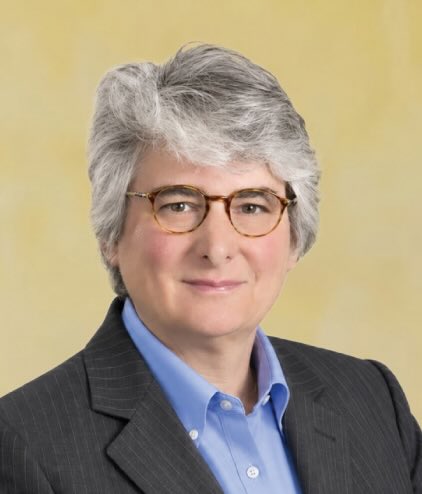 Debra R. Schoenberg
Owner & Founder
Debra R. Schoenberg
Owner & Founder






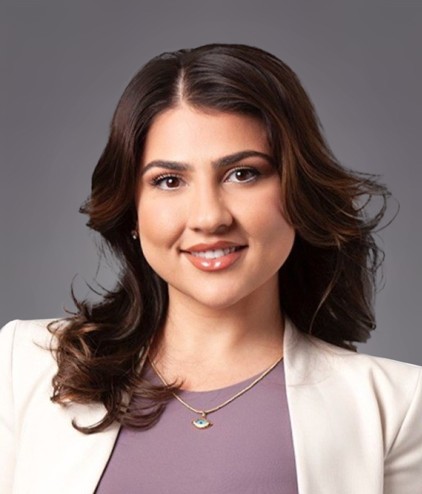 Kimia Kojouri
Associate
Kimia Kojouri
Associate